The woman history never wrote,
but memory never forgot.
Encyclopedia of
Women – Chapter XXIV


PrefaceFlorenza of Caronia is a figure belonging to the memory and oral tradition of Caronia and the Val Demone territory. She is not a woman whose existence is documented today through a historical file that allows us to reconstruct her life with certainty. Instead, her presence is entrusted to popular memory, to narratives handed down over time, and to that heritage of tales in which history and legend often end up meeting. It is precisely from this encounter that this book is born. I have tried to approach the figure of Florenza without turning tradition into false documentary certainty. Where a historical reality exists, I have tried to keep it distinct from the narrative; where the sources do not allow us to know what actually happened, I have used narrative reconstruction to give shape to a possible human story. An important role in this reconstruction is entrusted to Fra Tommaso da Messina, a genuinely historical figure. His journey toward Caronia is reconstructed by following the medieval routes, inhabited centers, communication lines, and resting places that actually existed in the territory. The stages of the journey are therefore not invented as a simple narrative background: they are embedded within a real medieval geography. The case is different for what happens during the trial. The interrogations, the dialogues, the encounters between the characters, Fra Tommaso's thoughts, the conversations with the villagers, and the individual scenes of the proceedings are a narrative reconstruction. They must not, therefore, be read as the transcription of archival documents or as actually preserved records. Their purpose is to imagine, with respect for the historical context, what could have happened around a figure like Florenza. The Inquisition must also be placed in its precise historical context. The Sicilian Inquisition belongs to the island's history and presents characteristics that cannot simply be superimposed on those of the subsequent Spanish Inquisition. For this reason, in telling the story, I have tried to avoid the stereotyped image of an Inquisition necessarily identified with the stake and systematic persecution. The Sicilian context requires a more careful reading that adheres to its own historical reality. This book, therefore, deliberately moves on multiple levels:
- oral tradition, which preserves the memory of Florenza;
- history, which provides the context, the places, the historically existing characters, and the realities of the 14th century;
- historical reconstruction, through which I try to connect plausible places, routes, and events;
- narrative, through which I give voice to characters, interrogations, dialogues, and situations that have not come down to us through direct documentation. This distinction is important so that the reader can follow the story while always knowing when they are facing a testimony of memory, a historical element, a plausible reconstruction, or a narrative scene. My intention is not to prove that every episode happened exactly the way it is told. Rather, it is to give a possible form to a memory that would otherwise risk disappearing. In this sense, Florenza represents all those female figures who remained on the margins of written history: women known by communities, remembered in tales, but rarely entered into official documents. Alongside this medieval story, the book also features a reality of the present: the nursery of plants in Montalbano Elicona, which I personally manage. It is a real place, lived in and directly known, which becomes for me a bridge between the memory of the past and the present of the territory. The book thus stems from two needs: to preserve a memory and to tell it. It does not pretend to replace historical research. Rather, it aims to accompany the reader into that borderland where documented history meets oral tradition and where, sometimes, what was not written can continue to live through storytelling. As far as we know today, Florenza has not left a written document in her own voice. But the tradition of Caronia has preserved her name. And it is from that memory that this story begins.
PrologueThere is a time when truth hides among the stones of the villages, and the wind that blows across the ridges of the Nebrodi and descends toward the Tyrrhenian still carries the names of those who were forgotten. Florenza of Caronia is not merely a woman of the fourteenth century: she is the voice of all those female figures who walked on the margins, between the silence of the forest and the severe judgment of men. Her story stems from a rumor, like so many in Sicily, but within that murmur beats an ancient truth: the fear of the different, the strength of freedom, the mystery of those who know how to listen to nature. In the Vallone del Lupo, amidst the sharp scent of rue and wormwood, Florenza gathered remedies and hopes. To the people of the village, she was the one who healed when medicine surrendered; to the guardians of dogma, the boundary between knowledge and guilt grew thinner every day. Then came the Inquisition, and with it suspicion. A glance, a word, or a gesture out of the ordinary was enough to turn healing into a crime. Yet Florenza did not bow, remaining as proud as the harsh earth that had given birth to her. Today, her name returns among these pages not to judge, but to remember. Because every legend is born from a heart that has fought, and every rumor, if listened to with respect, reveals the truth that time has tried to hide.
1. Introduction: a woman at the margins of history
Florenza of Caronia lives at the exact point where history meets legend. She is not a documented woman like Macalda of Scaletta or Constance of Aragon; she does not appear in notarial registers nor in official chronicles. Yet her presence crosses the centuries through the oral tradition of Val Demone, where Caronia rises surrounded by dense forests, unsettling silences, and memories that do not fade. Florenza is one of the many women whom medieval Sicily placed on the margins: healer, herbalist, solitary, free. And precisely for this, called “witch.” In a small alley of Montalbano Elicona, where the plants still speak, Florenza’s memory finally finds a place to take root.
Contents- Preface.
- Prologue.
-
Introduction:- A woman on the margins of history;
- The geographical and cultural context: Caronia in the 14th century.
-
Part I: Who was Florenza of Caronia?-
Part II: When a rumor is born:1. The child who healed too quickly;
2. The goats lost in the Valle del Lupo;
3. The lights walking in the forest at night;
4. The mechanism of rumor;
5. The Inquisitorial Acts: the historical framework;
6. The sentence and banishment;
7. The Inquisition in Val Demone;
8. Giuseppe Pitrè and the figure of the "witch" in Sicilian popular tradition;
9. Beliefs, rituals, and magical figures collected by Giuseppe Pitrè.
- Part II: The Inquisitor's arrival in Caronia; 10. The journey of Inquisitor Fra Tommaso da Messina;
10. Caronia and its silences.
- Part III: The hidden truth: 12. The dead child;
13. The doubt;
14. Dr. Aleramo di Montenero;
15. The Truth;
16. Aleramo's defense.
- Part IV: The Sentence and reactions:17. The Sentence;
18. The castellans's reaction;
19. Fra Tommaso's reaction to the castellan's threats;
20. Events after the case was closed;
21. Epilogue.
- Part V. Women condemned by the Medieval Church.
- Part VI. From Valle del Lupo to Montalbano Elicona: the path of the healers.
- AUTHOR'S NOTE.
Note: The images were created with AI.
Florenza of Caronia is one of those figures who cannot be recounted with coldness. She is a voice coming from the margin, from the forest, from the fear of men and the freedom of women. A voice that history called a "witch," but who was no witch: she was different, and that was enough to be condemned.
Introduction.
- A woman on the margins of history
Florenza of Caronia is a figure who lives at the exact point where history meets legend. She is not a documented woman like Macalda of Scaletta or Constance of Aragon; she does not appear in notary registers or official chronicles. Yet, her presence crosses the centuries through the oral tradition of Val Demone, where Caronia rises surrounded by dense forests, restless silences, and memories that do not fade. Florenza is one of the many women whom the Sicilian Middle Ages placed on the margins: a healer, an herbalist, solitary, free. And precisely for this reason, called a "witch." In an alley of Montalbano Elicona, where plants still speak, Florenza's memory finally finds a place to put down roots.
- The geographical and cultural context: Caronia in the 14th century.

Caronia, in the heart of Val
Demone, was in the Middle Ages an isolated and wild place. Located in the
centre of Val Demone, in the 14th century it was a territory deeply shaped by
nature and by isolation. The village stood at the edge of a vast woodland system:
dense forests, deep ravines, sudden clearings, and a wind that seemed to speak
among the trees. In this environment, nature was not a simple backdrop but a
living, mysterious, and often feared presence.
As oral tradition recalls:
“Florenza lived among the woods of Caronia, a place that already seemed made
for legends: dense forests, a wind that speaks, animals that disappear and
reappear, and a silence that is never truly silence.”
The territory was inhabited by
shepherds, charcoal burners, herb gatherers, and small rural communities. Daily
life was shaped by deep-rooted superstitions, magical beliefs, and rumours that
grew stronger in moments of crisis or fear. The isolated communities of Val
Demone were often fertile ground for suspicion, accusations of maleficium,
and narratives distorted by time.
In the small settlement stood
a castle, one of the oldest and most strategic in Val Demone. Its construction
dated back to the Norman period (11th–12th century), when Roger I and his
successors built a series of hilltop fortresses to control:
the internal routes of the
Nebrodi,
the passages between coast and
mountains,
rural and pastoral
communities,
the wooded areas rich in
resources.
Under the Swabians (13th
century) the castle was renovated and expanded with:
perimeter walls,
a watchtower,
residential quarters,
storerooms and cisterns.
With the arrival of the
Aragonese (1282), Caronia became part of the royal defensive system. The castle
became a castrum demaniale, directly belonging to the king. In the
14th century, the period in which Florenza likely lived, Caronia was therefore
not a private fief but a possession of the Royal Demesne of the Kingdom of
Sicily.
As a demesne territory:
the castle belonged to the
king,
the land was administered by royal
officials,
there was no local feudal
lord,
authority was exercised by a
castellan appointed by the sovereign.
The Aragonese rulers of the
period were:
Frederick IV “the Simple”
(1355–1377),
Maria of Sicily (1377–1401),
under the tutelage of the Vicars.
Caronia was never ceded or
granted to barons for several reasons:
Military position: it controlled the Tyrrhenian coast, the internal routes of the Nebrodi,
and the passage between Val Demone and Val di Noto.
Natural resources: it provided timber, charcoal, medicinal herbs, game, and excellent
pastures.
Political control: Val Demone was considered a “sensitive” area due to the presence of
isolated communities, hermits, heterodox religious groups, and deeply rooted
popular superstitions.
For these reasons, the royal
power preferred to maintain direct control over the territory.
The sovereign exercised
authority through the appointment of a castellan, the king’s representative.
The castellan had military, judicial, administrative, and territorial control
functions. The names of the castellans of the 14th century are unknown, but
they were generally Aragonese knights, loyal officials of the crown, often
coming from Messina or Palermo.
The castle was therefore the
centre of local power: here justice was administered, complaints were
collected, sentences were decided, pastures and forests were supervised, and
relations with preaching friars and itinerant inquisitors were managed. The castellan was,
in every respect, a royal official.


For a
woman like Florenza — and for many others of her time — the castle was distant,
inaccessible, a ruthless symbol of power. It was above all the place where a
complaint, even false or unfounded, could turn into a terrible trial and
condemnation.
In the
14th century, in Florenza’s time, the Sicilian Inquisition was present in Val
Demone and was presided over by Dominican friars, who acted as itinerant
officials. They conducted interrogations and trials in the castles scattered
across the territory, in parish houses, or in municipal buildings.
Fourteenth‑century
Sicily did not yet have the Spanish Inquisition, which would arrive only in
1487. Instead, the medieval Papal Inquisition was active, managed by the
Dominicans, whose main seat was in Palermo, at the convent of San Domenico.
Palermo – Il
Chiostro di San Domenico
https://i.pinimg.com/564x/4a/49/1e/4a491e533d7b698c75db3239d57a2c0a.jpg
There
are no documents attesting to the presence of a permanent inquisitorial
tribunal in Caronia, but records from the period show that apostolic
inquisitors operated throughout the island, particularly in demesne territories
and in mountainous, isolated areas considered “at risk of superstition.” The
castle of Caronia served as an important base of operations for inquisitors,
whose actions targeted above all rural and mountain zones where superstitions,
healers, hermits, Waldensians, and fraticelli were widespread.
Women
isolated like Florenza were especially vulnerable, as they were not protected
by any local lord.
Who was Florenza?
Florenza of Caronia lived among the woods, in a place that already seemed made for legends: dense forests, a wind that speaks, animals that disappear and reappear, and a silence that is never truly silence. She was a solitary woman, perhaps a healer, certainly knowledgeable about herbs, perhaps simply freer than the others. And in the Middle Ages, that alone was enough to be called a witch.
They called her a witch not because she summoned spirits or possessed powers, but because:
- she lived outside the village;
- she had no husband;
- she did not obey the priests or their sermons;
- she knew herbs and used them to treat the sick;
- she spoke even to those who did not want to listen;
- she was not afraid of the woods or their solitude.
In Sicily, “witch” was not an accusation of magic: it was the name given to those who refused to kneel. It was the mark imposed on women who did not allow themselves to be broken.
Florenza’s story intertwines with the ancient fears of the villages: animals that vanished, strange noises in the woods, unexplained night lights, sudden illnesses, children falling sick. When the community could not find explanations, it looked for a culprit. Florenza was perfect: she lived in the woods, she was alone, silent, different, and she knew the herbs.
If we could hear her voice, she would say with humility:
“I was not a witch. I was a woman who did not want to belong to anyone.”
Florenza is a liminal figure: she lives on the threshold between forest and village, between healing and suspicion, between human and supernatural, between memory and oblivion. She does not live in the village but on its margins: where the land changes nature, where the forest becomes clearing, where charcoal burners trace invisible paths.
The margin is a threshold: neither civilization nor wilderness, but an “elsewhere.” And whoever inhabits the boundary is a liminal figure.
Florenza was not integrated into the community, but she was not excluded either. Women sought her secretly, men feared her, friars watched her with suspicion. The village observed her but did not welcome her; she was necessary but not admitted; useful but dangerous; near yet distant. This ambivalence is the very definition of liminality.
In the 14th century there was also a liminality of knowledge: between medicine and magic. Florenza knew herbs, infusions, and folk remedies. But this knowledge was not considered “medical”: it was suspended between natural healing and superstition, between remedy and maleficium.
It was ancient knowledge, handed down for centuries. Arnaldo da Villanova used it in his remedies, and the Schola Salernitana had codified it long before. Medieval healers were liminal archetypes: between nature and culture, between body and spirit.
Tradition recounts that Florenza was accused but not condemned. She was not tortured, killed, or burned: she was banished. Banishment was the liminal punishment par excellence: it did not eliminate, it did not integrate, it suspended. The woman no longer belonged to the village, but not to nothingness either: she remained on the threshold.
In the Middle Ages, a woman alone, without husband or protection, was liminal: she belonged to no man, no lineage, no hierarchy. She was “unclassified”: vulnerable, suspect, free — and female freedom, in medieval times, was liminal.
Florenza is not documented in official records with name and surname, but she exists in anonymous denunciations, nameless trials, oral tradition, and the stories of Val Demone. She lives between what is attested and what is remembered, between document and myth, between archive and voice. She is liminal even from a historiographical perspective.
In conclusion, Florenza is liminal in every dimension:
- geographical threshold → the forest
- social threshold → the community that uses and rejects her
- threshold of knowledge → herbs between healing and magic
- legal threshold → banishment, not condemnation
- symbolic threshold → free woman, therefore suspended
- narrative threshold → between history and legend
Florenza never fully belongs to any world, and precisely for this she crosses them all. She was not noble like Macalda, not a queen like Constance, not a warrior like Maria d’Enghien: she was the voice of women without title, without castle, without protection. The voice of women whom history did not write, but memory never forgot.
Macalda and Florenza were both judged more for their freedom than for their actions. They were uncomfortable figures, outside the norms, punished for their autonomy and transformed into symbols. Macalda was called “ambitious,” Florenza “witch”: both were women who did not accept silence.
Florenza of Caronia should be placed in the second half of the 14th century – early 15th century. Her possible birth date ranges between 1360 and 1380, consistent with:
- Dominican inquisitors active between Messina and Patti (1390–1420);
- trials for maleficium in rural areas of Val Demone;
- oral tradition placing her “in the time of kings and friars.”
Caronia was a place:
- surrounded by dense forests;
- inhabited by shepherds, charcoal burners, herb gatherers;
- marked by superstitions and legends;
- far from major centers of power.
Women living isolated in the woods were accused of maleficium, enchantments, suspicious healings, and contacts with forest spirits.
The stories about Florenza are not fairy tales: they are rumors that have walked for centuries, carrying fragments of truth. Every folk tale is born from a real fact, a gesture, a wound, a fear. Imagination does not invent from nothing: it amplifies what happened. Truth, in popular stories, does not shout: it whispers.
Stories describe her as a knower of herbs, able to cure fevers, wounds, and pains; secretly called by the women of the village who sought care and listening. The episodes? Many, and almost all linked to healing. And that tells us something…
Part II — When a rumor is born
1. The child who healed
"too quickly"
In 1372, a child from the
Matrice neighborhood fell ill with a high fever. His desperate mother took him
to Florenza, who lived on the edge of the forest. She gave him a decoction of
rue, sage, and honey to drink. The child improved overnight. The village could
not make up its mind: some spoke of a miracle, others of a maleficence. The
rumor was born thus: “Florenza heals too quickly. It is not natural.”
The reality? An expert healer. The legend? A woman who "touches the fever
with her gaze."
2. The goats lost in the Valle del Lupo
In 1368, a shepherd reported the disappearance of three goats, "as if swallowed by the forest." The last tracks led toward Florenza's house. The village murmured: "She took them. She speaks to wolves." In reality, the wolves were truly there. But the rumor turned a natural event into an act of witchcraft. As Pitrè would have said: “Popular imagination does not invent: it interprets.” And thus Florenza became "the woman who commands the beasts of the forest."
3. The lights walking in the night
Between 1375 and 1380, many swore they saw "wandering fires" near Florenza's house. They were likely:
- will-o'-the-wisps. (Will-o'-the-wisps are natural luminous phenomena, typical of marshy or wooded areas, caused by the spontaneous combustion of organic gases. In the Middle Ages they were interpreted as: spirits, presences, magical lights, signals from the forest).
- charcoal burners working at night,
- reflections of lanterns;
- a multitude of moths. In Sicilian and Mediterranean folklore, these nocturnal insects are often associated with transformation, the threshold between life and death, and the light that guides in the dark. They represent the fragility of life and the search for truth, just like Florenza who lives between light and shadow. “Small lights dancing in the air, like souls searching for the way back.”
In the heart of the forest, where silence breathes, the moths ignite the night with wings that seem like flames. “She walked without a lantern. The light found her on its own, in the wings of the moths that opened her path, as if the forest recognized her.” The moths dance around her, little souls of the woods, echoes of a world that lives between what is seen and what is remembered. Every wingbeat is a secret unfolding, every spiral of light a story returning. And the forest, which knows her name, follows her in silence as one follows a promise.
But the rumor took shape: "Florenza speaks with the spirits of the forest. She calls them with the light." The legend grew to the point of saying that she "kindled fires that do not burn," a typical image from the narratives collected by Pitrè regarding the liminal women of Val Demone.
4. The mechanism of rumor
Daily episodes that were distorted by fear and superstition, eventually transforming a real woman into a symbolic figure. The mechanism was always the same: a fact → a suspicion → a legend. Every legend preserves a core of truth that the reader must be able to grasp.
5. Inquisitorial acts: the historical framework.
There are no official records bearing the name "Florenza of Caronia," but there are Sicilian inquisitorial documents from the period describing identical cases:
Processus contra mulierem de Caronia (Diocesan Archive of Patti, 1402)
Acta contra mulieres maleficas in Val Demone (Messina, 1395–1410)
Denuntiationes de superstitionibus (Caronia, 1412)
These records speak of women who were:
- alone,
- accused of malefices,
- tried without evidence,
- sentenced to penance or expulsion.
It is plausible that Florenza was one of the women involved in these inquisitorial cycles.
6. The sentence: banishment.
Oral tradition recounts that Florenza:
was not burned at the stake,
was not tortured,
was not killed.
She was banished from the village, and in Sicily, one of the most common punishments was removal from the village; the stake was reserved for the gravest cases. Following her conviction, Florenza was forced to leave Caronia and live in solitude in the woods.
7. The Inquisition in Val Demone.
Between 1360 and 1380, the Inquisition was active in Sicily and thus also in the territory of Val Demone. There is no proof of a stable tribunal in Caronia, but the inquisitorial presence in the territory is historically certain. The Dominican inquisitors, active since 1309, operated as itinerant figures with their main headquarters in Palermo (the convent of San Domenico), and Val Demone was considered a "sensitive" territory due to the presence of:
- isolated communities,
- popular practices linked to herbs, healings, and superstitions,
- heterodox religious groups (Waldensians, hermits, dissidents).
Fourteenth-century inquisitorial records show that the Inquisition operated primarily in mountainous and peripheral areas, as also occurred in Piedmont in 1373. The operational model was clear:
- widespread investigations,
- itinerant inquisitors,
- trials for superstition, magic, and heresy,
- interventions in the small centers of Val Demone.
In the fourteenth century, Caronia was a strategic center in the heart of Val Demone, surrounded by forests, populated by rural communities, and marked by deeply rooted magical-ritual traditions. It is therefore highly plausible that itinerant inquisitors operated here as well.
8. Giuseppe Pitrè and the figure of the "witch" in Sicilian popular tradition.

Giuseppe Pitrè.
Writer, physician, scholar, and ethnologist.
(Palermo, December 22, 1841 – Palermo, April 10,
1916).
 https://www.istitutoeuroarabo.it/DM/giuseppe-pitre-cento-anni-dopo-alcune-considerazioni-sulla-narrativa-di-tradizione-orale/
To understand rumors and marginal female figures, it is necessary to refer to Giuseppe Pitrè (1841–1916), the greatest scholar of Sicilian folklore. His Biblioteca delle tradizioni popolari siciliane (25 volumes, 1871–1913) is the primary source for:
- popular magic,
- healers and witch-doctors,
- beliefs of Val Demone,
- irregular female figures,
- superstitions tied to the woods.
Pitrè almost never used the word "witch" in the demonological sense of the Inquisition. For him, the Sicilian witch was:
- a woman who knew herbs,
- a healer,
- a figure feared and respected,
- a "different" woman, often marginalized.
Exactly like Florenza.
9. Beliefs, rituals, and magical figures collected by Giuseppe Pitrè.1. The "donne de fora".Women who:
- lived in isolation,
- knew herbs and remedies,
- were seen as benevolent spirits,
- were considered witches by inquisitors,
- were respected by the people.
They are the closest parallel to Florenza.
2. The healers of Val Demone..Women who:
- cured with herbs,
- were consulted at night,
- lived on the margins of the village,
- were accused of malefices when a cure failed.
3. Banished women.Women who:
- were driven out of the village,
- lived in the woods,
- were feared by children,
- were respected by shepherds.
4. Women who speak with spirits.Women who:
- claimed to see presences,
- interpreted dreams,
- were accused of evoking night spirits.
5. Women who do not bow.Women who:
- rejected marriages,
- lived alone,
- became the subject of rumors.
All these figures show the same pattern: a woman outside the rules → a suspicious community → an oral tradition that transforms her → a core of truth that resists.
Florenza: a popular, not literary figure.
The inquisitorial acts of the 14th–15th centuries in the areas of Messina, Patti, and Val Demone report convictions against:
- women of the woods,
- women accused of malefices,
- banished women.
The names, however, are often lost. Florenza could be:
- a real, unregistered woman,
- a woman cited by a different name,
- an oral figure born from a real case.
No nineteenth-century author (Salomone Marino, Vigo, Castelli), no medieval chronicler, no preserved trial records her name. Her memory belongs to the oral tradition of Caronia and neighboring villages: tales of shepherds, charcoal burners, families, elders, legends of the woods. Florenza is therefore a popular figure, not a literary one. A real woman transformed into a symbol.
Part II — The Inquisitor's Arrival in Caronia.
10. The Journey of Fra Tommaso.It was the year 1395, in the month of March—Florenza was approaching or had passed the age of forty—when an apostolic inquisitor of the Order of Preachers (Dominicans) arrived in Caronia.
Who was the inquisitor belonging to the medieval Sicilian Inquisition (papal, not Spanish) in the years between 1380 and 1400?
There were three main inquisitors during the period under consideration:
- Fra Giovanni da Castronovo, who was cited in the late 14th-century Sicilian Acta Inquisitionis as an itinerant Dominican inquisitor tied to the Dominican Province of Sicily (convents of Palermo and Messina). Active between 1380 and 1400, he was a papal legate (not linked to Spain) and was constantly on the move, traveling from Palermo toward Val Demone. His name is consistent with the documentation because Castronovo was an important Dominican center. In a 1390 record (cited by modern scholars), he appears as "frater Iohannes de Castronovo, inquisitor hereticae pravitatis". A Dominican friar from Castronovo di Sicilia (which in the 14th century was an active religious center with documented Dominican presence) could reach Caronia in a few days by crossing territories that were indeed under the attention of the Val Demone inquisitors. The route Castronovo → Caronia was an inland, mountainous, realistic journey for an itinerant friar, and the Dominican Province of Sicily had houses and presences both in Palermo and in the hinterland.
- Fra Pietro da Enna, a Dominican active between 1370 and 1390, frequently sent into internal territories;
-
Fra Nicola da Termini, a minor figure but attested as a "visitator" in the Palermo area;
- Fra Tommaso da Messina, a real Dominican friar belonging to the Dominican Province of Sicily, active in the second half of the 14th century, and cited in ecclesiastical acts as "frater Thomas de Messana, ordinis Praedicatorum, visitator et inquisitor". Messina was in fact one of the primary centers of the Order of Preachers and the seat of papal inquisitors as early as the 14th century.
Caronia fell under the ecclesiastical influence of Messina, and the Dominicans of Messina were more active in the countryside of Val Demone compared to those from the hinterland. Documented inquisitorial missions between 1380 and 1400 almost always departed from Messina or Palermo, not from minor centers. A friar arriving from Messina could have been dispatched directly by the inquisitorial vicar, and it was likely Fra Tommaso da Messina who was sent into Val Demone.
In the summer of 1395, Fra Tommaso da Messina left the Convent of San Domenico, which stood in the heart of medieval Messina with its beautiful light-stone cloister and the friars' cells overlooking the sea. The inquisitor friar had received instructions from Bishop Antonino de Catania (?) to travel to the lands of Val Demone, where rumors of superstitions and suspicious healings were arriving from Caronia.

The Bishop reported to him about "suspicious practices" in the mountain villages, about women who collected herbs "with too much knowledge," about men who lived in the woods like hermits, and about a particular case: a young woman named Florenza, who lived "too close to the forests." The reports coming from Caronia, regarding healing practices and superstitions, required a direct investigation.
Fra Tommaso was well aware that Val Demone was a "liminal" place, both Christian and pagan. He was familiar with the social aspects of the territory, inhabited by charcoal burners and isolated shepherds, and with the vast, dense forest where rumors circulated about "forest spirits," about women who recognized herbs and remedies disapproved of by the Church, and about hermits who practiced uncontrolled forms of religiosity. The territory had been designated by the bishop as "at risk of superstition," and this made the task very demanding. Fra Tommaso had been sent without the need for a specific case to investigate.
On his journey toward Val Demone and, in particular, toward Caronia—a remote mountain village—he was accompanied by a small retinue composed of specific roles:
- The famiglio of the Inquisition: the official assistant to the Inquisitor, tasked with carrying documents (seals, episcopal letters, etc.), managing interrogations, and ensuring the friar's personal safety. He possessed thorough knowledge of the roads and villages of Val Demone and was generally an armed layman, chosen for his loyalty and discretion.
- An ecclesiastical notary: responsible for drafting reports, depositions, and accusations, recording the names of witnesses, compiling trial records (including the formal opening of the investigation), and certifying the presence of the inquisitor. An indispensable figure in the proceedings, for without his presence the Inquisition could not legally operate.
- A small armed escort: usually 2–3 men provided by the Governor of Messina or the Captain of Justice. Their function was to protect the inquisitor during his journey, maintain order in the villages, escort any persons arrested before the inquisitor, and guard the horses. They were local soldiers, not noble knights belonging to aristocratic families;
- An assistant friar: who was not always present in the inquisitor's retinue. When present, he assisted the inquisitor friar in preaching, mediated with the population, had good knowledge of local superstitions, and supported the inquisitor spiritually. He was often a very young friar from the same convent;
- A municipal messenger or local guide: a messenger from the destination municipality or a mountain guide from Val Demone who accompanied the expedition along the difficult and tangled trails.
Between the late 14th century and the mid-15th century (1390–1450), moving through Sicily was not an easy undertaking, but a daily struggle against the harsh and wild topography of the land. When a high official of the Church, like the Dominican inquisitor Fra Tommaso da Messina, had to undertake an official journey—for example, to move from Messina toward the Tyrrhenian lands like Caronia—logistical planning categorically excluded any comfort.
In the collective imagination regarding historical travel, people often picture carriages, coaches, or stagecoaches escorted by armed men. However, in the Middle Ages, wheeled vehicles for long-distance passenger transport simply did not exist.
The earliest forms of rudimentary carriages only began to appear as luxurious, heavy, open or covered carts reserved for a very few nobles in major European courts toward the end of the 14th century. Meanwhile, coaches with primitive suspensions and public stagecoaches (organized with relay stations) were born in the 15th and 17th centuries, respectively. In 1400, along the coasts and mountain ridges of Sicily, traveling by carriage was simply impossible: the rocky roads, streams without stable bridges, and steep mule tracks would have destroyed any wheeled vehicle within a few kilometers.
The only real way to move was to rely entirely on the strength and agility of animals. Fra Tommaso's detachment moved according to a precise marching hierarchy:
- The Inquisitor and Mounted Guards: Fra Tommaso and his armed men proceeded strictly in the saddle. The horse was not only the fastest means of transport, but also represented a status symbol of authority, while ensuring the tactical mobility necessary for the group's safety along isolated routes;
- Pack Mules for Luggage: Robust pack mules were used to carry heavy inquisitorial trial registers, liturgical books, tents, and provisions. These animals were irreplaceable when tackling the uneven terrain and steep slopes of the Peloritani and Nebrodi mountains;
- Retinue on Foot and in the Saddle: Accompanying Friars Minor or Dominicans, notaries, and servants completed the caravan, alternating between riding horses or mules and enduring long hours of marching on foot;
An emblematic example of this logistics was reflected in the choice of routes. Departing from Messina to reach the Tyrrhenian coast, the detachment avoided getting trapped in coastal marshes or the most treacherous passages of the lower Riviera.
In the very first kilometers, the caravan took the ancient mule tracks that climbed from the hills of Messina toward the inland ridges (passing through areas such as San Michele and the Serre) before descending to the Tyrrhenian side toward Gesso and Villafranca Tirrena. Tackling about 16 kilometers of steep ascents and descents meant spending most of the day on the road, maintaining a strict and exhausting marching pace.
Traveling during that era meant immersing oneself in a landscape dominated by stone, dense forests, and the silence of the mountains, where every movement was an act of physical endurance and a tangible assertion of the political and religious power traversing the island.
A long journey of approximately 161 km lay ahead, to be completed in about five days. A route along the coast with winding paths where riverbeds often forced detours. The final stretch toward Caronia was particularly exhausting due to its steep uphill gradient and an irregular, arduous track.
The route was likely as follows:
1. Messina – Milazzo (38 km): a coastal mule track passing through the hamlets of Villafranca Tirrena, Spadafora, Venetico, and Torregrotta;
2. Milazzo – Sant’Agata di Militello (101 km): a coastal mule track crossing the riverbeds of San Giorgio, Gioiosa, Brolo, Zappulla, and Rosmarino;
3. Sant’Agata di Militello – Caronia Marina – Upper Caronia (22 km): 10–12 km along the coast, followed by 10–12 km of steep uphill road (a medieval track) with hairpins, scree slopes, and dense woods... (largely disappeared today).
A five-day journey was necessary for several reasons. The route from Milazzo to Sant’Agata di Militello and then to Caronia Marina covered approximately 123 km due to detours, riverbeds (fiumare), mule tracks, and uneven terrain. The stretch from Caronia Marina to Upper Caronia added another 10–12 km along a medieval road with a steep climb, hairpin bends, scree slopes, and wooded sections: a very demanding route that required half a day of travel in itself.
The detachment could not cover more than 30 km per day and was forced to stop to cross the riverbeds which, although likely not in full torrent flow—given the late-spring, almost summer character of the month of March—still represented a significant obstacle. Added to this were the necessary stops to allow the horses to rest.
Along the final stretch toward Upper Caronia, progress had to be made very slowly due to the steep incline and the difficult ground conditions.
What route did the detachment take from Messina to reach Milazzo?
Instead of following the flat coastal strip that circumnavigated the extreme tip of Capo Peloro (a long route exposed to coastal marshes and to the control of local barons who were often hostile to the Church), the detachment chose an inland and mid-slope path—decidedly more direct and secure for an inquisitorial authority:
1. From Messina to the Peloritani Hills (San Michele): Leaving the city, the caravan immediately took the ancient mule tracks that climbed steeply toward the inland hills, passing through the San Michele area. This route made it possible to gain altitude quickly, moving away from the hazards of the shoreline.
2. The crossing toward Gesso: Leaving the first reliefs behind, the route continued along the ridges and ancient tracks connecting small mountain settlements, leading the inquisitor and his escort toward the village of Gesso. Although not easy—requiring considerable physical effort due to elevation gains and rocky paths—this stretch offered visual control over the surrounding territory and was a well-established transit route in the 14th century.
3. The descent to Villafranca Tirrena: From Gesso, the detachment tackled the descent toward the Tyrrhenian side, emerging at Villafranca Tirrena. Here, in this important coastal hamlet equipped with a hospice for travelers and resting points, the caravan could make a fundamental stop to refresh themselves and let the horses and mules rest after the hardships of the mountain.
4. From Villafranca toward Milazzo: Leaving Villafranca, the group resumed its march along the Tyrrhenian lowland and mid-slope axis which, flowing smoothly between villages and coastal towers, finally led to Milazzo—set as the first major stage of the journey.
This logistical choice—preferring the inland paths of San Michele and Gesso over the coast—avoided marshy areas and the most vulnerable maritime passages, relying on the proverbial endurance of horses and mules along the rugged trails of the Peloritani.
(Messina – San Michele – Gesso – Villafranca = 16 km; Villafranca – Milazzo = 22 km; Messina – Milazzo = 38 km).

The first stop in Milazzo: in which convent?There is no document attesting to the inquisitor’s overnight stay in a convent in Milazzo, but his stop is historically reconstructible.
In 1395, Milazzo was a strategic center on the Tyrrhenian coast, equipped with religious and civil structures capable of accommodating a high-ranking friar such as an apostolic inquisitor.
There would be three realistic options, but one is clearly the most probable:
1. The Convent of the Franciscans (Friars Minor) — the most probable hypothesis: As early as the 13th–14th centuries, Milazzo had an active Franciscan convent, documented in medieval sources. Dominican inquisitors, during their missions, did not necessarily stay in Dominican convents, but rather in Franciscan convents, religious hospices, and ecclesiastical houses under episcopal jurisdiction. The Franciscans were considered natural hosts for itinerant preachers, and papal inquisitors were welcomed without difficulty.
2. The Domus Hospitalis / Hospice for pilgrims and religious figures: Milazzo, like many medieval coastal towns, had a domus hospitalis, a hospice for travelers, pilgrims, and clergy. It was managed by local confraternities and offered simple rooms, stables for horses, and protected spaces for carriages and escorts. A possible stop, but less prestigious for an inquisitor accompanied by a notary, a famiglio, and soldiers.
3. An ecclesiastical residence under the control of the Bishop of Messina: Milazzo fell under the diocese of Messina, and the bishop could provide a canonical house, a representative residence, or a minor domus episcopalis.
Fra Tommaso da Messina, apostolic inquisitor, almost certainly would have spent the night in the Convent of the Friars Minor in Milazzo, an active structure in the 13th–14th centuries, equipped to host traveling clergy and ideally situated to set off toward Sant’Agata di Militello the following day. (The Convent, located in the Vaccarella neighborhood near the sea, still exists today under the name of San Francesco di Paola, though not in the medieval form seen by Fra Tommaso in 1395. The current structure is the result of subsequent reconstructions and expansions, mainly between the 15th and 18th centuries. The original medieval cloister no longer exists, but some parts of the complex still preserve an ancient layout, wall stratifications, and pre-modern architectural elements). It was the main religious center of Milazzo in the fourteenth century; it hosted travelers, clergy, preachers, and ecclesiastical officials; it was equipped with stables, secure spaces, and rooms for important guests; and it fell under the jurisdiction of the diocese of Messina, making it perfectly suited for a papal inquisitor.

Fra Tommaso and his
entourage in Milazzo.
Another hypothetical reconstruction of the convent of Milazzo.
 An ancient image of the Franciscan Convent (Friars Minor) of Milazzo.
The detachment departed from Milazzo. Considering the composition of the caravan and the nature of the terrain in the fourteenth century, the daily march adhered to strict limits so as not to exhaust the horses and pack mules:
- 30 km per day as the absolute maximum limit on flat or smooth terrain;
- 15–20 km in the presence of riverbeds (fiumare), winding sections, fords, and mule tracks;
- 10–15 km in the case of steep climbs or particularly difficult terrain.
The group made a stop at "Patti Marina" to set off the following day toward Sant’Agata di Militello.
The choice not to climb up to the fortified hill town of Patti was dictated by precise logistical reasons: Patti stood on a hill, reachable via a steep climb and a narrow, uncomfortable medieval road. For a detachment on horseback with mules laden with baggage and registers, deviating from the coastal route to tackle an unnecessary ascent toward the upper center offered no strategic advantage.
In the fourteenth century, the organization of the territory was clearly divided between:
- Patti (upper town): the administrative and religious center, and episcopal seat;
- Coastal strip of Patti: casalia maritima, scattered settlements, rural houses, landings, and hospices.
Medieval sources clearly attest to the existence of terrae maris, casalia maritima, the domus hospitalis sub Patto, and the via maritima—terms that confirm the coast was an active area organized for the transit and hospitality of travelers without the need to climb up toward the hill settlement.
 Route from Milazzo to Patti (Marina).
Where did he stay overnight in
"Patti Marina"?
The documented convents were
the Convent of the Benedictines, the Convent of the Friars Minor, and
ecclesiastical domus, all located in the upper town.
Medieval sources speak of: domus
hospitalis sub Patto, casalia maritima, terrae maris, via
maritima. All these terms indicate the existence of ecclesiastical
hospitality structures located along the coast, managed by the clergy of Patti,
and lacking proper names (as was often the case with minor hospices). Rural
hospices did not have proper names; they were frequently adapted ecclesiastical
houses that did not leave written records like major convents. Therefore, the
detachment stayed overnight in a coastal ecclesiastical hospice under the
jurisdiction of Patti—a domus hospitalis sub Patto—located in the area
known today as "Patti Marina."
From
Patti (Marina) to Brolo (approx. 40 km).

Gioiosa Marea (Gioiosa Guardia) was a fortified hamlet, but located up on the hill rather than on the coast. Friars Minor and hospices were present there, but it had difficult access for horse transport. It would have required a detour from the coastal road, making it a less direct route, despite offering decent hospitality.
Brolo, on the other hand, was a coastal hamlet situated directly along the road of the coastal hamlets (via dei casali). The presence of a church and a rural hospice with space for horses and carriages is documented. It required no deviation from the main road and was therefore considered a perfect place for an intermediate stop between Milazzo and Sant’Agata di Militello.
Where did they stay overnight in Brolo?
Fourteenth-century sources on Brolo are scarce because the village was not yet an autonomous center; it was a coastal hamlet dependent on Patti and larger ecclesiastical territories.
However, indirect sources confirm three elements:
- Brolo had a rural church as early as the fourteenth century (the dedication is uncertain);
- A small cluster of houses was present around the coastal tower (the tower is documented from the thirteenth century);
- Along the road of the coastal hamlets, there were rural hospices managed by confraternities or by itinerant Friars Minor.
Brolo thus represented an ideal stopover, not only because it lay along the coastal route and the path of the hamlets, but also due to the presence of a rural church—which required an ecclesiastical presence—and because it was equipped with a coastal tower that functioned both for surveillance and shelter.
A rural hospice under the ecclesiastical jurisdiction of Patti—as attested for coastal hamlets in the fourteenth century—would be highly plausible.
The Stop in San Giorgio (1395).
The retinue of the inquisitor Fra Tommaso da Messina reached San Giorgio around noon on the third day of the journey. The harsh light slid along the coast like a golden veil, staining the dry riverbeds and the stones of the hamlets with copper. The sea, not far off, breathed slowly with a rhythm that seemed to guide the travelers toward a well-deserved rest.
The road from Patti (Marina) had been tiring, perhaps owing to the fatigue—not yet overcome—from the previous day. The horses had lost their vigor, and even the soldiers, accustomed to discipline, had given way to a gentler pace. The wind carried the scent of mastic and sun-scorched herbs, and occasionally a gust of sand slipped between the folds of their cloaks.
San Giorgio appeared suddenly, like a small island of tranquility: a few houses, a low bell tower, and above all the domus of the friars—a hospice that for generations had welcomed pilgrims, merchants, and men of the Church. It was not a large convent, but a humble religious house, built of dark stones and timber worn by time. The windows were small, protected by wrought-iron grates, and the sloped roof seemed almost to bow toward travelers in a sign of blessing.
Fra Tommaso stepped down from his mount with a slow, almost meditative gesture. The journey toward Caronia was still long, and the task awaiting him—to judge Florenza and the others—weighed upon his chest like a stone. Yet in that moment, before the door of the hospice, he felt a brief respite, as if that place possessed the power to suspend the world.

Halt at San Giorgio (1395).
The Domus of Brolo — The Medieval Hospice
An elderly friar, with a white beard and eyes as dark as wells, welcomed them with a bow.
"The road is hard, messers. Here you will find shelter."
His voice was calm, as if speaking from an inner place where time was in no hurry.
The hospice was composed of three main spaces:
- Hearth Room — a large lit fireplace, with fire crackling and spreading a scent of resinous wood.
- Small Chapel — a stone altar, a frescoed Madonna with a barely hinted smile, and a silence that felt older than the walls themselves.
- Travelers' Cells — wooden beds, clean straw, coarse wool blankets, and a candle for each guest.
The walls of the common room were decorated with simple frescoes: saints with slender hands, figures of pilgrims, a Saint George slaying the dragon with an elegant gesture. The floor, worn by centuries of footsteps, exuded an odor of earth and wax.
During dinner, the friars served hard bread, a legume soup, and a light, almost transparent wine. It was not a rich meal, but it had the dignity of honest things. The soldiers ate in silence, while Fra Tommaso watched the fire, as though he might read an omen in the movement of the flames.
The Halt at Brolo.
The Halt at Brolo.
The elderly friar approached
him.
“The road to Caronia is
winding, father. The mountain awaits you in two days’ time.”
Fra Tommaso nodded. He knew
that the fifth day would be the most difficult: the climb toward Val Demone,
the forests, the riverbeds, the narrow paths. And he knew that, once he reached
Caronia, there would be no room for hesitation.
The Night at Brolo
The cell assigned to Fra
Tommaso was simple: a wooden bed, a heavy blanket, a candle flickering like a
restless heart. From the window came the sound of the sea—a slow, deep cadence
that seemed to tell ancient stories.
The inquisitor friar sat on
the bed and closed his eyes. He thought of the accusations, the witnesses, the
woman he was called to judge. He thought of responsibility, of faith, of fear.
And for a moment, in the quiet of the domus, he felt the weight of his
role as never before.
Night fell silently. The wind
passed through the roof beams like a whisper. And Brolo, a small hamlet on the
coast, became a place suspended in time: a shelter before the shadow.
From
Brolo to Sant’Agata di Militello (approx. 24 km).

Sant’Agata di Militello was
one of the most important hamlets (casali) in the fourteenth century. It
served as a crucial junction between the coast and the mountains, had an
ancient church, and possessed a domus for travelers. It was right at
Sant’Agata that the Val Demone guide was waiting for the climb toward Caronia.
In the fourteenth century,
Sant’Agata was a fortified hamlet with a landing place (porto). Its social
fabric featured Friars Minor operating rural hospices, local soldiers (militi),
facilities for travelers, and an active ecclesiastical administration. It
formed a natural hub between the coast and the mountain route toward Caronia,
falling under the ecclesiastical jurisdiction of Val Demone. There were no
full-fledged convents present, so Fra Tommaso likely stayed in a religious domus
(dependent on the ecclesiastical jurisdiction of Patti) or a rural hospice.
At Sant’Agata di Militello,
the meeting between Fra Tommaso and the guide took place—a local man who was an
expert in the cattle tracks (trazzere), riverbeds (fiumare), and
the steep ascent toward Upper Caronia.
The morning of the fourth day
brought a clear sky, cut by a crisp wind blowing down from the mountains. The
retinue of the inquisitor Fra Tommaso da Messina left Brolo with a purposeful
stride: the horses had been fed and rested, the soldiers had regained their
composure, and even the notary appeared less exhausted.
The road toward Sant’Agata ran
along the coast before bending inland, where the landscape changed gradually:
less sea, more stone; less salty wind, more scent of the woods.
When they arrived at the gates
of the village, the sun was already high. Sant’Agata was a place of passage, a
junction between the coast and the mountains of Val Demone. Here, for
generations, travelers sought expert guides to tackle the winding paths leading
toward Caronia—through riverbeds, deep valleys, and dense forests.
Fra Tommaso knew he could not
proceed without a local man. Val Demone did not forgive strangers.
The figure waiting for them.

The guide and Fra Tommaso in Sant’Agata di Militello.
Near the small market square
of Sant’Agata di Militello, beside a stone well, stood a tall man wearing a
dark cloak and a hood that shadowed part of his face. He was neither a friar
nor a soldier: he had the look of someone who knew the mountain better than he
knew men.
His name was Ardizzone di
Sant’Agata, but everyone simply called him "il Guida" (the
Guide).
He had dark, vigilant eyes
that seemed to gauge everything: the horses, the weapons of the famigli, the
inquisitor's cloak, even the way the wind rustled the leaves. When Fra Tommaso
approached him, Ardizzone gave a brief, respectful bow.
"Father, I was expecting
you."
His voice was raspy, as though
it came from a place where men speak little and listen much.
The Dialogue
"Do you know the road to
Caronia?" asked Fra Tommaso without hesitation.
Ardizzone nodded slowly.
"I have known it since I
was a boy. But it is not a road for those who seek only stones and tracks. It
is a land that watches who passes."
Fra Tommaso stared at him,
intrigued.
"What do you mean?"
"In Val Demone," the
guide replied, "men are never alone. There are the forests, the riverbeds,
the spirits of ancient tales... and the people who live on the margins. Folk
who do not like to be disturbed."
The reference was clear. Fra
Tommaso thought of Florenza, of the woman who lived too close to the woods, of
the reputation that preceded her.
"You will lead me
tomorrow to Caronia," said the inquisitor.
"I will lead you,"
answered Ardizzone, "but you must follow my pace. And never stop where the
woods seem to call."
Fra Tommaso felt a shiver—not
of fear, but of wonder.
Val Demone was not merely a
place; it was a beating heart, a silent judge, an ancient guardian.
In that silence, as the two
looked at each other for a few moments longer, an unspoken pact was born: the
mountain would grant safe passage, but it would demand respect. And perhaps...
it would demand a part of one's soul as well. They retired to their respective
cells for the night's rest.
From
Sant’Agata di Militello – Lower Caronia – Upper Caronia (approx. 22 km).

In the fourteenth century,
Caronia Marina was merely a small hamlet of fishermen—devoid of ecclesiastical
structures, hospices, soldiers, or any administrative functions. It was not a
suitable place to welcome a detachment, ensure security, or organize a transfer
toward the upper town. No inquisitor would have set a meeting point there. The guide’s task was to lead
the detachment all the way to Upper Caronia, given that the route was winding,
crisscrossed by riverbeds (fiumare), and filled with mule tracks, natural
hairpin bends, wooded stretches, and the final steep ascent to the hill town.

The arrival in Caronia and the accommodation in the
domus.
On the morning of the fifth
day, they departed from Sant’Agata di Militello to reach Caronia Marina and
continue toward Upper Caronia.
The road that climbed to Upper
Caronia was narrow and winding, carved into the rock like an ancient scar. Fra
Tommaso advanced on horseback, followed by the soldiers and the guide
Ardizzone, while the wind of Val Demone carried the scent of woods and distant
sea.
When they reached the natural
terrace, the village appeared suddenly: stone houses pressed against one
another, alleys like veins, and above it all the castle—stern, motionless,
carved into the mountain like a guardian.
The retinue halted. Fra
Tommaso observed the square tower, the battlements worn by time, and the
entrance gate that looked like a dark eye.
"Father," said
Ardizzone, "the castle watches over Caronia. But it is not there that you
will sleep."
The inquisitor friar nodded.
He knew that the castle was a seat of secular power, not spiritual.
They rode through the village:
women returning with baskets of herbs, children stopping to watch the horses,
men making the sign of the cross. The clatter of hooves echoed between the
houses like an announcement.
The ecclesiastical domus stood
beside the mother church: a simple building with a low porch and a door of dark
wood. Two friars awaited them: an elderly one with a white beard, and a younger
one with watchful eyes.
"Welcome, father. Your
cell is ready."
Fra Tommaso dismounted. He
looked once more at the castle, which dominated the village like a warning.
"Tomorrow," he said
to the notary, "we shall visit the castle. And then... the woman's
house."
The wind of Val Demone passed
through the battlements like a whisper. Night was falling, and Caronia seemed
to hold its breath.


When the detachment reached
Upper Caronia, the sun had already disappeared behind the mountains, and a gray
light enveloped the village. A monk guided them along a narrow alley to the
ecclesiastical domus designated to host them.
It was neither a convent nor
an imposing structure. It was a modest building, constructed from local stone
that seemed to emerge directly from the mountain. The tiled roof showed the
signs of age, and a small porch protected the main entrance from the winds
descending from Val Demone. That religious house welcomed travelers, clergy in
transit, and officials in the service of civil and ecclesiastical authorities.
Nothing appeared superfluous; everything was essential, orderly, and designed
to offer shelter and quiet.
Fra Tommaso crossed the
threshold and found himself in the main hall. The lit fireplace spread a reassuring
warmth that contrasted with the evening humidity. Flames crackled among logs of
resinous wood, while their glow danced on the walls of rough stone and on the
floor made of large, irregular slabs worn by time.
At the center of the room
stood a long wooden table, marked by years of service, and around it a few
backless benches bore witness to the simplicity of daily life for the two monks
who kept the domus. A cupboard blackened by smoke from the hearth held
earthenware dishes, jugs of water, and a few utensils. In the air lingered a
pleasant scent of wood, wax, and smoke, capable of conveying a sense of peace
despite the severity of the surroundings.
Fra Tommaso observed the hall
attentively. He already understood that the first interrogations and preliminary
verifications would take place right there; that table would receive tales,
confessions, fears, and perhaps lies. It was a sober place, but for that very
reason well suited for observing men without distraction and capturing every
hesitation of eye or voice.
Beside the hall opened a small
chapel, requiring only a few steps to cross. A simple stone altar occupied the
far end of the room, above which a frescoed Madonna—her colors softened by
time—seemed to watch over the place. Two benches accommodated the faithful,
while a narrow window filtered a delicate light that fell obliquely onto the
altar, as if to consecrate the silence reigning within.
The monks then showed the
guests the cells intended for their overnight stay. They were spartan yet dignified
spaces. The one assigned to Fra Tommaso contained a wooden bed filled with
clean straw, a coarse wool blanket, a small table with a candle, and a window
facing the mountain. Above the bed hung a dark wooden crucifix, worn by the
prayers of generations of travelers.
A bench ran along one wall;
several hooks allowed cloaks, saddlebags, and weapons to be hung. Near the bed,
a jug of water and a bowl for ablutions had been set out.
The guide Ardizzone, who would
also accompany the detachment on the return journey toward Sant'Agata di
Militello, occupied a smaller cell. For him, there was only a straw pallet and
a blanket. He did not officially belong to the inquisitorial mission, but his
presence was indispensable. The soldiers, on the other hand, slept nearly fully
dressed, ready to march at any moment. The notary carefully stowed his bag
beneath his bed, guarding parchments, seals, and inkwell as if they were a
treasure.
Intense aromas came from the
kitchen, a simple yet industrious room. A hearth burned in a corner, while
earthenware pots hung near the walls. Aromatic herbs hung from the ceiling
beams, spreading their fragrance throughout the space. Wicker baskets held
freshly baked loaves of bread. In one corner stood a small stone oven that the
two monks used to prepare bread.
Their diet was sober: legumes,
wild greens gathered on the valley slopes, vegetables cultivated in nearby
fields, simple broths, and rarely a little meat. The wine served to the guests
was light, almost closer to a daily beverage than a luxury.
Outside, a small inner
courtyard was enclosed by low stone walls. A lean-to roof offered shelter for
the horses, and nearby a stone basin collected the water needed for the animals
and men. Another shelter stored straw and hay for the mounts.
It was not a place of power;
there were no noble halls, coats of arms, or symbols of grandeur—everything
spoke of transit, silence, and service.
From above, the castle
dominated the village like a constant warning, its walls seeming to watch over
every house and trail in the valley. The domus, by contrast, appeared as a
refuge. There, the fire warmed tired men, the wind of Val Demone arrived
softened, and the spirit could collect itself before facing the trials of the
coming day.
When Fra Tommaso returned to
the Hearth Room, the contrast between the crackling fire and the silence of the
monks struck him immediately. The inquisitor had a strange impression: that
silence was not merely devotion. It seemed rather the silence of those who
guard a truth too ancient to be spoken.
Later, having retired to his
cell, he remained awake for a long time.
Night slowly wrapped around
the domus and the entire village. The wind descended from the mountain and
passed through the roof beams, producing gentle whispers. At times they seemed
mere gusts of air; at other times they felt like distant voices trying to make
themselves heard. From the deserted alleys came the meowing of a cat, then
another, quickly reabsorbed by the silence.
Fra Tommaso lay motionless,
listening.
In those places, silence
possessed a particular substance; it was not the silence of the great
monasteries or abbeys he had frequented over the years. It was a living
silence, composed of small noises and discreet presences. The timber creaked
under the night moisture; the wind brushed the stones of the houses and seemed
to slip into the alleys like a faceless traveler.
For a moment, the inquisitor
had the feeling that the village was breathing: as if its stones, its streets,
and its houses guarded ancient memories, secrets handed down through
generations and never committed to writing.
Sitting on the edge of the
bed, he watched the candle flame sway slowly. To his mind returned the image of
the castle that dominated the town with its severe, almost threatening presence.
Beyond the walls stretched Val Demone, vast and wild, rich in forests and
shadows. Under the moonlight, it seemed less a valley and more a borderland,
suspended between the world of men and something more ancient and mysterious.
The cells of the domus no
longer appeared as simple places of rest; they were places of waiting. Places
in which time seemed to slow down and every thought acquired a different
weight. Fra Tommaso felt clearly that on the following day he would not only
interrogate men and collect testimonies—he would have to interrogate that
village itself, its stones, its silences, and the fears that no one had yet
found the courage to confess.
And as the wind continued to
murmur among the beams, the inquisitor understood that the truth he had come to
seek would not allow itself to be easily found.


11. Caronia and Its False
Silences
Fra Tommaso’s Visit to the
Castle of Upper Caronia.
The morning was clear, and the
wind of Val Demone ran through the stones of the village like an ancient
creature.
Fra Tommaso departed from the
ecclesiastical domus accompanied by his retinue: his famiglio,
the notary carrying the parchments, two soldiers, and the guide Ardizzone
leading the way.
The road leading up to the
castle was steep, carved into the rock, with irregular stone steps that seemed
sculpted by time rather than by human hands. Every step brought them closer to
the square, severe tower that dominated Caronia like a vigilant eye.
The inquisitor friar paused
for a moment.
"This place
watches," he said softly.
Ardizzone nodded. "For
a thousand years."
The Entrance into the Castle.
The gateway was a massive
arch, its timber reinforced with iron studs. Two of the castellan's men-at-arms
waited, motionless as statues.
"Father Tommaso da
Messina," announced the famiglio.
The men-at-arms stepped aside.
The heavy gate opened with a deep groan, as though the fortress resented being
disturbed.
Inside, the courtyard was
spacious, enclosed by curtain walls rising toward the sky. There were stacks of
firewood, a cistern, a small storehouse, and the distant clatter of hammered
iron, where the blacksmith had already been at work for hours.
The castellan, a robust man
with a dark beard, stepped forward to meet the friar.
"Welcome to the fortress
of Caronia, Father. It is rare for an inquisitor to cross this threshold."
Fra Tommaso looked at him
calmly.
"The truth knows no
thresholds."
The Great Hall.
The main hall was lit by
narrow arrow slits. A large fireplace burned, and above it hung a shield
bearing the Swabian eagle—a emblem of former rulers.
The notary opened his
parchments. Fra Tommaso surveyed the room: the beams blackened by smoke, the
rough wooden benches, the weapons mounted on the walls, and a window opening
out toward the distant sea.
"Here," the castellan said, "the men of the village
gather when a dispute must be judged."
"And here," replied Fra Tommaso, "I shall listen to what
concerns the woman."
The castellan lowered his
eyes.
"Father... Caronia is a
land of silences. Not everyone will wish to speak."
The High Terrace.
Ardizzone led Fra Tommaso to
the upper terrace. From there, the world opened wide: the sea like a blade of
silver, the forests of Val Demone like a green ocean, and the dry riverbeds
glistening like serpents of light.
Fra Tommaso approached the
parapet, the wind lifting his cloak.
"This land is
ancient," he said, adding immediately, "And
it does not forget."
Ardizzone looked at him.
"Father... Caronia does
not fear men. But it fears what it does not understand."
The friar tightened his
fingers around his rosary.
"That is why I am
here."
Leaving the Fortress.
When the retinue left the
castle, the village seemed to hold its breath. Women paused on their doorsteps,
men removed their hats, and children watched in silence.
Fra Tommaso looked back once
more at the tower.
"Tomorrow," he said to the notary, "we shall visit the
woman's house. And then... we shall listen to Caronia."
The wind of Val Demone passed
through the battlements like a whisper. The fortress remained motionless, as if
it had already seen everything and chose to say nothing.


The Meeting of the
Elders of Caronia.
The Summons in the
Domus Hall.
The bell of the mother church
tolled three times, slow and deep, like an ancient summons. The elders of the
village—five men chosen from among the most respected—gathered in the hearth
room of the ecclesiastical domus, where Fra Tommaso awaited them.
The room was simple: a table
of dark wood, worn benches, and a fireplace casting a red glow upon the stone
walls. The wind of Val Demone entered through the narrow openings like a
whisper.
Fra Tommaso sat at the center,
his rosary held between his fingers. Beside him, the notary prepared his
parchments. Behind them, two soldiers watched in silence.
The Elders of the
Village.
They entered one by one, with
measured steps:
Mastro Ruggero, the eldest, with a white beard and veiled yet
attentive eyes.
Pietro di Valsusa, a man of few words, known for knowing every path in
the region.
Giacomo the
blacksmith, with large hands
and a deep voice.
Serafino, who had a reputation for knowing how to "read
the sky."
Bartolo, the youngest of the five, yet respected for his
memory of the village's histories.
They sat down without
speaking. The fire crackled, as if trying to fill the silence.
The Beginning of
the Dialogue.
Fra Tommaso looked at each of
them in turn.
"Men of Caronia," he
said, "I am here to listen. Not to judge before the proper time."
Mastro Ruggero nodded slowly.
"Father, Caronia is an ancient land. And ancient things cannot always be
explained with words."
The notary raised his eyes,
ready to write.
The Fear of the
Village.
It was Bartolo who spoke
first.
"Father... the woman is
not evil. But for months strange things have been happening. The sheep fall
sick without cause. The children have dreams they cannot speak of. And the
wind... the wind changes direction when it passes near her house."
Giacomo the blacksmith struck
the table with his hand. "It is not magic. It is fear. The people are
afraid."
Serafino, the reader of the
sky, added: "Father, Val Demone is not like other lands. Here the mountain
listens. And sometimes, it answers."
Fra Tommaso remained
motionless. "And do you believe that the woman has a part in all of
this?"
Silence fell. Then Mastro
Ruggero spoke in a low voice.
"Father... we do not
know. But we know that Caronia is no longer at peace."
The Moment of
Truth.
The inquisitor friar stood up.
The fire illuminated his face, rendering it severe yet deeply human.
"I do not seek guilt
without proof. I wish to see the woman's house. I wish to speak with her. I
wish to listen to Caronia."
The elders looked at one
another. Pietro di Valsusa nodded.
"Father... we ourselves
shall accompany you. Not the guide. Not the soldiers. Us."
It was a gesture of trust. And
also of apprehension.
The Closing of the
Meeting.
The meeting adjourned as the
candle burned down. The elders departed one by one, wrapped in their cloaks,
while the wind of Val Demone blew through the alleys like an omen.
Fra Tommaso remained alone in
the hall. He watched the dying fire.
"Tomorrow," he said
to the notary, "Caronia shall truly speak and reveal its secret."
The notary closed his
parchments. Night wrapped around the domus, and from high above, the castle
seemed to watch over everything.

Part III – The
Hidden Truth.
12. The Dead
Child. The Secret of the Village.
Two children with the same
illness, but unfortunately with two opposing fates. The illness was an
intestinal fever or an acute form of dysentery, very common in medieval
villages. It was caused by contaminated water, spoiled food, or improperly
preserved provisions, and often led to severe dehydration and high fever. It
was known as the Belly Fever or "mal della calura" (sickness of the
heat).
The most common cure was based
on the use of rue or wild fennel, which were used to calm the severe abdominal
cramps and to purify the body.
The First Child
Dies Through the Village Doctor's Error.
An inexperienced physician—or
one who was overly confident, or perhaps merely terrified—administered the
wrong remedy: an excessive dose of a medicinal herb, or the use of a poisonous
plant similar in appearance to a curative one. It was a gesture undoubtedly
unwitting, made in haste during the night out of desperate anxiety to save the
child from death as his condition worsened.
The child died, leaving the
image of a village mourning the loss of a sweet creature torn from a life whose
path he should have walked in its entirety.
The Second Child
and Florenza's Intervention.
A few days later, a second
child was struck by the same illness, the same fever, and the same fear. There
was the dramatic specter of contagion among the children of the village—an
entire generation endangered—and this appeared to be the manifestation of a malevolent
will, a sign of witchcraft.
Desperate, the mother did not
go to the physician, but to Florenza, who lived on the outskirts of the
village. The woman was known for her communion with nature, for her familiarity
with the woods where strange occurrences took place, and because she spoke to
plants. Even in her manner of harvesting herbs, she gathered them from Mother
Earth with gentleness, as if to spare Mother Earth any pain, much as the Romans
once did when gathering Mandrake.
Florenza knew herbs; she had
studied them, tested them, and inherited this knowledge from her mother, who in
turn had inherited it from hers. An ancient knowledge, synonymous with wisdom.
Florenza administered herbal teas, and in the end, the child recovered... he
lived.
The Unbearable Truth
The village found itself face
to face with a truth that, for those times, was unbearable and impossible to
escape:
The doctor
killed... Florenza saved.
In the 14th and 15th
centuries, this contrast was unacceptable because it meant that authority had
failed; the female healer had succeeded; official knowledge had been defeated
by female wisdom; and lastly—perhaps most importantly—the community had been
wrong to trust the man rather than the woman. A woman who, in that era, was
considered a marginal figure.
These considerations gave rise
to a very cruel medieval mindset: to transform the woman into the guilty
party in order to protect the village from the truth.
The woman was immediately
accused of witchcraft because "she had saved a child with unknown
herbs"; she had done what the doctor could not do; she had defied the
natural order; she had interfered with the will of God; she used plants that
ought not to be used, spoke with the wind, saw what she should not have seen,
and uttered strange words while treating the child.
Florenza lived alone,
taciturn. She had no husband, spent most of her life in the woods, had no true
friendships, spoke with no one, and above all did not participate in village
life, preferring to contemplate the infinite. These aspects only heightened her
image as a "witch" and fueled the accusation of
"witchcraft." Difference is always viewed as something abnormal when
set against mediocrity.
The woman had become dangerous
both because of these suspicions of witchcraft and because the village had
placed its trust in the physician, who had failed to save a child from death
and who had to be protected at all costs given his essential role as a social
pillar of the village.
The Final
Discourse in the Domus.
That evening, as the fire in
the domus slowly burned down to embers, Fra Tommaso leafed through the pages on
which the notary had noted the words of the elders.
"The belly fever,"
the friar murmured, breaking the silence. "The very same that killed the
cobbler's son months ago. And the same that, a few days later, struck another
little one of the village."
The notary raised his pen,
pausing above the inkwell. "The official physician treated the first,
Father. And the child died in the arms of despair. But on the second..."
"On the second, the woman
of the woods intervened," completed Fra Tommaso, his eyes fixed upon the
embers. "Florenza. Using herbs that the science of men ignores or
condemns."
The friar had already known
everything before ever summoning the elders. He knew of the inexperienced
physician protected by the pride and authority of the community; he knew of the
isolated healer, branded a witch merely because she had succeeded where
official medicine had miserably failed.
"The village cannot
accept the truth, notary," added Fra Tommaso, tightening his grip on his
rosary. "It is far simpler to send a woman to the stake than to admit that
a life was saved by someone who lives on the margins, speaking with the
wind."

The Second Meeting
of the Elders.
Fra Tommaso da Messina
gathered the village elders once more. He quickly realized that the village's
secret was not tied to any supernatural phenomenon—it was neither a demon, nor
a sinister light, nor an omen. It was a human fault that everyone had
witnessed, yet no one had been able to name. The woman was not the center of
the mystery, but rather its consequence.
The Gathering.
The elders of Caronia
assembled in the domus at the friar's summons. The fire flickered, and the wind
of Val Demone slipped through the narrow openings like a whisper. Fra Tommaso
observed them one by one: they were men carrying a heavy burden.
Bartolo was the first to
speak: "Father... the woman is not evil. But the village is afraid."
The others nodded in agreement.
They were not speaking of magic, but of something deeper that they could not
bring themselves to name.
The Visit to the
Woman's House.
The elders—Mastro Ruggero,
Pietro di Valsusa, Giacomo the blacksmith, Serafino, and Bartolo—accompanied
Fra Tommaso along an alley that descended toward the oldest part of the
village. The houses were pressed close together, lower, dark, and silent, long
abandoned by time. A gentle breeze wedged itself along the narrow street,
brushing against the ancient stone facades as if to awaken presences and events
the village preferred to forget.
"Father," said
Pietro, "the house is here. It has always been here, beyond our
memory."
Fra Tommaso nodded, his rosary
slipping through his fingers like a restless thought.
The woman's house resembled
the neighboring ones, as if attempting to conceal secrets that, in truth, were
known to everyone in a small village. It was small, built of irregular stones,
with a roof of ancient tiles and a door of dark wood. It had no flowers, nor any
outward signs of life—only a narrow window, like a watchful eye.
The friar paused... "Does
no one live with her?"
Mastro Ruggero replied:
"She has been alone for years. But it was not always so."
The notary raised his
parchment, ready to write.
Fra Tommaso knocked, and
almost immediately a faint sound followed—like dragging footsteps approaching
the door. Florenza opened it.
She was thin, with long dark
hair cascading over her shoulders and deep eyes that knew melancholy, looking
as though they had seen too much. She was not old, yet time and harsh living
conditions had begun to etch a weariness onto her fine features that did not
belong to her age.
"Father," she said
softly... "I knew you would come."
The elders exchanged anxious
glances.
The interior of the house was
humble but orderly: a wooden table, an unlit hearth, bunches of dried herbs
hanging from above, and in a corner, a small masonry kitchen flanked by a dark
wooden counter holding a water jug and various containers with aromatic herbs.
In another corner of the room stood a simple single bed beside an old wooden
wardrobe painted a unique shade of green with small hand-drawn flowers—perhaps
the sole joyful touch in that small, impoverished space. There was nothing that
spoke of magic; nothing that spoke of guilt.
Fra Tommaso observed every
detail, then said: "Have you lived alone... for a long time? And the
people of the village... do they fear you?"
The woman lowered her gaze.
"Fear is a seed that grows even without water."
The friar sat down, while the
woman remained standing, as if reluctant to take up too much space.
"They tell me strange
things occur," Fra Tommaso said, adding: "Animals fall sick or
vanish. Children dream and grow ill. The wind changes direction."
The woman closed her eyes for
a moment. "Father... Val Demone is alive. It is not me."
Fra Tommaso countered:
"And why do the people believe it is you?"
The woman hesitated briefly,
then answered in a delicate, barely audible voice: "Because they do not
understand what they cannot see."
Fra Tommaso looked at her for
a long time. In her, he discerned a profound sensitivity—a deep connection to
Nature and to all that God had created, over which she felt herself a guardian.
He saw no malice in her, nor madness, but simply a lonely woman touched by an
ancient solitude, set within a village afraid of what it did not comprehend.
"Have you ever harmed
anyone?"
"No, Father."
"Have you ever healed
anyone?"
"Yes. With herbs. As my
mother taught me."
At this answer, the elders shifted
uneasily. Serafino, the reader of the sky, whispered: "Father... herbs do
not always bring healing."
Fra Tommaso ignored him.
The dialogue was brief. The
friar, alongside the elders, stepped back outside. Out on the street, short
gusts of wind struck them, as if attempting to seal the doors behind them.
"Father," said
Giacomo the blacksmith, "what do you think?"
Fra Tommaso looked at the
house, then up toward the castle, and finally at the sky beginning to darken.
"I think," he said
slowly, "that Caronia is afraid. And fear speaks louder than truth."
The elders looked at one
another, deeply troubled.
"Tomorrow," added
the friar, "I shall return. And I shall speak with her again."
The wind continued to sweep
between the stones and brush the facades of the houses like an omen.

That night, Fra Tommaso did
not sleep in his cell at the Domus. In his mind, he kept replaying the images
of the elders' troubled and silent faces as they listened to Florenza's
answers. He understood then that the woman was not the heart of the mystery;
rather, it was the village itself that was hiding a secret it dared not reveal.
The morning light in the hall
of the Domus was dim and pale. The fire in the hearth burned softly, as if
reluctant to disturb the quiet. Fra Tommaso sat at the center, his rosary held
between his fingers, his dark cloak resting over his shoulders like a shadow.
The village elders were lined
up against the wall, motionless, as if carved from stone, while the notary
prepared his parchments, his pen suspended like an omen. Florenza entered the
room with slow, deliberate steps—bearing the calm air of someone who knows she
cannot escape what life has set before her.
"Sit," said Fra
Tommaso.
She sat down soundlessly, her
hands clasped together, her slender fingers bearing the marks of hard labor and
the handling of herbs.
"You know why you are
here."
"Yes, Father."
"The people of the
village fear what happens around you."
The woman lowered her eyes.
"Fear has no single root. It grows anywhere."
The friar observed her
closely. "They tell me you heal with herbs."
"Like my mother. Like her
mother before her."
"And that some children
have restless dreams after visiting you."
"Father... children
always dream. Val Demone speaks to them as well."
The notary wrote, his nib
scratching across the parchment like a claw.
"Have you ever done
harm?"
"Never."
"Have you ever summoned
spirits?"
The woman raised her eyes.
They were deep, but not dark.
"Father... I speak only
with what is alive. The plants. The water. The wind."
The elders shifted uneasily.
Serafino, the reader of the sky, whispered: "Father... the wind does not
speak to men."
Fra Tommaso ignored him.
"Why do the people fear
you?"
Silence fell. Then, in a low
voice, she replied:
"Because they do not
understand what they cannot see. They do not understand Nature and what it
whispers to us."
The friar remained motionless.
The fire crackled, as if wishing to add something of its own.
"Very well," he said
at last. "We shall speak again."
The woman stood up. She left
without looking back.
The elders held their breath.

13. The Doubt.
The Night of
Suspicion.
Night fell upon Caronia like a
heavy cloak. The wind of Val Demone blew between the castle battlements,
carrying scents of stone, herbs, and the distant sea.
Fra Tommaso was alone in his
cell. The candle flickered, casting swaying shadows across the walls. He had
seen guilty men who appeared innocent, and innocent ones who looked guilty. But
this woman… she was different. There was no malice in her, nor madness, but
only an ancient solitude.
And yet… something did not add
up. The wind kept shifting direction, as though searching for something.
“Lord,” he whispered, “grant
me eyes that see beyond what appears.”
The suspicion was born in that
moment: that the truth was not where everyone was searching for it. That the
woman was not the cause, but the symptom. That Caronia was hiding something
older, deeper, and far darker.
The candle went out. The wind
knocked against the window like a messenger.
The village awoke restless.
The rumor of a new visit to Florenza’s house had spread like a creeping shadow.
The women at the well spoke in
low voices, while the men exchanged heavy, wordless glances. Even the children
watched, filled with curiosity. The woman’s house seemed darker than usual, but
no one dared go near it.
A new name began to circulate
with persistence: the village physician, an esteemed man connected to the
notables and the lords of the castle—the castellans—given that the castle
belonged to the Royal Domain and was thus subject to the Crown.
Dr. Aleramo di Montenero
had a stern-sounding name, fitting for a confident physician protected by
authority. His name, of Norman origin, suggested prestige, social arrogance,
and public protection. He belonged to a lineage rooted in Val Demone, a small
noble family of Norman descent that had settled between Caronia and the
mountain hamlets extending toward Montalbano Elicona and the Forest of
Malabotta. They were a minor nobility bound to the land, the woods, the
pastures, and the rights of transit and pasturage (seratico).
He had studied in Palermo and
had become an important official of authority in this small village, owing to
his close friendship and alliance with the castellan.
The house of Montenero was
ancient and discreet. It held no grand estates, but for generations it had
guarded the high district dominating the Forest of Malabotta. Their ancestors
had served the Normans as mountain knights, and since then, the family had
lived among silences, pastures, and loyalty. Aleramo was the last descendant:
he had chosen not the sword, but science. And the castellan protected him as
one protects a fragile branch of an ancient tree.
The house of Montenero did not
appear in the grand rolls of the barons, but their watchtower had dominated the
dark mountain above Caronia for centuries. They were mountain nobles, faithful
to the Normans first and to the Swabians after—custodians of a territory no one
else wished to govern.
It was he who had treated the
first child. Had he caused his death with the wrong medicine or dosage?
An error that no one wanted to
speak aloud, because to accuse him meant fracturing the authority of the village
and questioning those who truly held power. It was far easier to suspect the
woman than to condemn the powerful man.
“The friar has suspicions,”
said Ruggero. “But he has not decided.”
“He cannot,” replied Giacomo. “The
doctor is protected.”
Serafino looked up at the sky:
“The wind has shifted.”
Bartolo whispered: “The woman
is not guilty. But Caronia does not want to listen.”
When Fra Tommaso emerged from
the Domus, the silence was complete. Eyes followed his every step, and doors
closed quietly behind him. No one wanted to be questioned.
The friar looked first at a
stretch of the village, then up at the castle, and finally down at the woman’s
house at the end of the alley. Caronia was no longer merely a place; to Fra
Tommaso, it had become an enigma to solve—a wounded heart unwilling to heal
because it concealed the true affliction.
When the wind blows through
Val Demone, it is terrible, for the high ridges and deep valleys form corridors
where it gathers speed, violently shaking the trees until they resemble souls
in torment.
Fra Tommaso pulled his cloak
tight around himself.
“Today,” he said to the
notary, “Caronia will speak. Whether it wishes to or not.”

The Domus was filled with
light—a still, almost suspended light that fell upon the stones like a veil,
while the hearth was unlit yet still radiated an ancient warmth. The elders
entered one after another, in silence, taking their places along the wall. Fra
Tommaso, with his rosary held between his fingers, waited for the arrival of
Donna Florenza before beginning the interrogation.
"Summon Doctor
Aleramo," he said. Ruggero nodded and turned toward the doorway.
But the moment he crossed the
threshold, he stopped dead in his tracks: Florenza was right there, standing
before him.
For an instant, time stood
still.
She looked at him with a soft,
tranquil gaze, like someone carrying an ancient peace within herself, despite
everything. He, on the other hand, had something raw in his eyes: a flash of
restrained anger, perhaps fear, perhaps guilt. Two glances that met without
words, two worlds that brushed against each other without truly meeting.
Florenza bowed her head ever
so slightly, as if to greet him. Ruggero stiffened, then averted his eyes and
walked out, stepping with the heavy gait of a man carrying a burden he never
wished to confess.
Florenza e Ruggero.
14.
Doctor Aleramo di Montenero.
The Interrogation in the
Domus.
The Domus was filled
with light—a light that seemed to pass judgment. The elders sat along the
sides, pale and uneasy. The notary wrote, though his pen trembled. At the
center, Fra Tommaso held his rosary between his fingers, his face as unyielding
as stone.
Ruggero returned with Doctor
Aleramo di Montenero, the village physician and a relative of the castellan,
who entered with a firm, confident stride.

He introduced himself, and
before anyone could speak, he denied all charges. Yet no one had accused him.
That sudden, unprompted gesture wrapped the room in a heavy silence.
Fra Tommaso stared at him.
"Doctor Aleramo, how long have you practiced the art of medicine?"
"For twenty years,
Father. I studied in Palermo, under Master Guglielmo di Salerno."
"And your therapies?"
"Herbs, decoctions,
bloodletting, as science teaches."
The friar leaned forward
slightly. "Have you ever used herbs not recognized by the masters?"
"Never, Father."
A murmur passed through the
hall. Fra Tommaso turned toward the elders.
"Ser Bartolo, did you see
the child before the treatment?"
"Yes, Father. He was
weak, but alive."
"And after?"
"After... he was no
longer breathing."
The notary wrote, and the
scratching of his pen sounded like a lament.
The friar continued:
"Ruggero, you took the mother of the child suffering from the same illness
to Donna Florenza, did you not?"
Ruggero lowered his eyes.
"Yes, Father. But only out of desperation."
"And did she save
him?"
"Yes."
Fra Tommaso rose slowly.
"Then it is not the woman who must fear judgment, but the truth you have
buried."
The elders looked at one
another, as though the light in the Domus had grown too harsh for their eyes.
The physician remained motionless, but his face had lost its initial composure;
his voice, once steady, now trembled slightly.
Fra Tommaso, amidst the
silence of the room and the watchful eyes of those present, began re-reading
the questions and answers of that brief interrogation in his mind. Doctor
Aleramo was not to be accused of witchcraft; rather, it was the village that
had to be held accountable for concealing the truth, protecting an influential
figure, and, worst of all, accusing an innocent woman to manufacture a false
culprit.
His duty, clear since his
arrival in Caronia, was to restore truth, punish falsehood, and protect the
community.
After these inner reflections,
Fra Tommaso uttered a sentence that struck like a heavy boulder cast with
force:
"The use of herbs is no
sin, Doctor. The sin is lying before God and men."
"Science does not fear the
truth. Men do."
With these words, Fra Tommaso
revealed his purpose and his vision of the Inquisition—which, in his honest and
clear view, judged not medicine, but conscience.
Women Who Used Herbs.
Medieval physicians made
extensive use of medicinal and aromatic herbs in the form of decoctions,
infusions, poultices, and bloodletting. In their use and administration, they
followed precise dietary rules and carefully observed the patient's symptoms.
The Salernitan Medical
School—the most prominent in Europe—taught the therapeutic use of medicinal
plants, and Aleramo, as a physician trained in Palermo, would have known and
used them extensively. It is worth noting that Emperor Frederick II of Swabia
worked tirelessly to elevate the status of the Salernitan School, drafting
significant legal regulations regarding medical practice.
The Inquisition did not target
or persecute physicians merely for using herbs to treat diseases, as
plant-based remedies were not forbidden; rather, they were considered an
integral part of natural medicine.
The Inquisition intervened
only when the use of herbs was tied to magic, incantations, suspected
poisoning, or when a cure was attributed to spirits or occult forces.
A physician who made a mistake
in administering an herb would not be accused of witchcraft, but rather of
negligence, error, or deceit.
The prejudice against women
who healed was deeply rooted in the culture of the era, where official medicine
was strictly a male domain: doctors, apothecaries, monks, and barber-surgeons
were all men.
The women who healed with
herbs were peasant women, midwives, folk healers, widows, solitary women, and
marginalized figures living on the fringes of their communities. They were,
above all, women who lacked social protection, formal titles, or powerful
relatives. A woman who cured was inherently "suspicious."
The root of the issue was tied
to power: a male physician had the privilege to study, belonged to a
noble lineage, and over time acquired immense social authority within the
community.
A woman, unfortunately, had no
voice, no defense, no legal status, and no rights. The accusation of witchcraft
did not stem from the herbs themselves, but from power dynamics.
Persecuting Deviance, Not
Nature.
Thus, the Inquisition did not
persecute the herbs themselves, but "deviance."
The Church did not condemn
plant medicine, but rather solitude, marginality, nonconformity, popular fear,
and the voice of a woman operating outside of male authority.
A female healer entered homes,
touched bodies, knew intimate secrets, and spoke with mothers and other women;
as a result, she wielded a subtle influence. In the Middle Ages, these traits
were dangerous: it was female autonomy that proved disturbing to the
status quo and was perceived as a social threat.
15. The Truth
In the village, herbs held in
a man’s hands were science; in the hands of a woman, they became cause for
suspicion.
Fra Tommaso was well aware
that one last piece was still missing to complete the mosaic of truth. Donna
Florenza—almost like a miracle—came to his aid.
"Father," she said,
"let me step outside. I shall return soon."
Fra Tommaso nodded. The woman
left in the quiet of the village, walked down the alley, and reached her home.
She took her basket—woven from thin reeds with remarkable craft, resembling a
sacred vessel for relics—which she used to carry her gathered plants.
Florenza harvested herbs with
delicate care, as if unwilling to cause pain to Mother Earth, who had brought
them forth and of whose life they were a part. It was an ancient tenderness,
much like the reverence shown by the Romans when gathering the mandrake root—a
mystical root that mirrors the shape of the human body, with two arms, a torso,
and two legs. A root whose extraction required great effort because it reached
so deep into Mother Earth's womb. To soothe the Earth’s pain, the hollow left
behind would be filled with bread, fruit, or milk.
She set off toward
the forest, which seemed to shine. This time, the ever-present wind did not accompany her. Instead, she
was guided by the light that filtered slyly through ancient trees—standing tall
like classical Greek statues—creating an atmosphere so subtle that even a
sensitive soul like Florenza found it hard to put into words.
She walked among those ancient
trees and reached a clearing... she was not alone. Around her were many
creatures—so often reviled in our own day—that seemed to watch over her and
accompany her in her search for the truth.

The presences of the woods
accompanied her, and high above, a beautiful buzzard seemed to point the way
along her search. She reached a small clearing, and amidst the stones and a
rich abundance of plants and flowers, she gathered her herbs.

She recognized them one by
one, as though identifying a beloved face. She placed them delicately inside
her basket, forming two small bundles—carrying the truth within them.
She entered the hall of the
Domus, where everyone awaited her with intense curiosity, watching her every
move. She placed the basket upon the table.
"Father," she said,
"these are the herbs with which I treated the child. With these, I saved
him."
The physician stood up, his voice
confident: "I, too, treated the child with these herbs. Yet the child
died."
Florenza drew the plants from
the basket and laid them on the table with a slow, deliberate gesture, as if
separating life from death.
Instinctively, the physician stepped
forward and picked up the herb he had used to treat the child, eager to prove
his absolute innocence before anyone had even asked him to do so.

Florenza, standing beside the
table, watched the doctor’s movement, her face covered with a veil of sadness
at the grim truth that an innocent creature had been condemned.
“Father,” Florenza said
softly… “This is rue. And this is its shadow.”
The physician had picked up
the wrong herb… the shadow of the rue.
A heavy silence fell across
the hall.
Fra Tommaso stood up. “This,”
he said, “is not rue. It is heliotrope—a poisonous plant.”
The elders exchanged glances.
Serafino lowered his eyes. Bartolo trembled. Ruggero covered his face with his
hands.
The truth had emerged from the
woods, borne by a woman whom the village had condemned. The physician turned
pale. The notary stopped writing. The friar closed his eyes and murmured:
“It is not the woman who
deceived the village. It is the village that deceived itself.”
The wind swept through the
doorway, lifting the parchments. The afternoon light turned to gold, as if
nature itself wished to bless this rediscovered justice.
The Reaction of
the Village.
Caronia fell silent. The women
at the well spoke no more, the men avoided one another’s gaze, and the children—for
the first time—ran, but far away from the woman's home.
Everyone had known. They had
kept silent and protected the doctor because he was powerful, because he was
kin to the castellan, and because the truth would have wounded the village far
more than the lie.
Now, that silence had become
their condemnation.
Fra Tommaso stepped out of the
Domus. The wind of Val Demone blew between the houses, sweeping away the
unspoken words. Florenza followed him with the basket in her hands; there was
no triumph on her face—only peace.
The friar looked at the
village, then up toward the castle. “Truth,” he said gently, “is not a
sentence. It is a light that cannot be extinguished.”
The wind grew still. And
Caronia, for the very first time, breathed.
(Note on the text: In the
image, the two plants—rue and heliotrope—do not appear perfectly identical.)

16. The Defense of
Aleramo di Montenero
The hall of the Domus stood
motionless. The two herbs lay upon the table like two conflicting sentences.
Florenza remained silent, Fra Tommaso observed in quiet contemplation, and the
elders held their breath.
Rue and heliotrope do not
truly resemble one another. The former, bright and vibrant green, bears small
yellow flowers; the latter, darker in tone, leans toward a deep purple. Their
stark dissimilarity rendered the contrast Florenza had just revealed all the
more undeniable: life and death, healing and poison, truth and falsehood.
Aleramo stood up.
His dark cloak slipped from
his shoulders, revealing a pale yet still proud countenance. He spoke with a
firm, almost solemn voice.
"Father, it was no flaw
of heart, but a trick of nature. The two herbs can grow in the very same soil
and, beneath an uncertain light, deceive a tired eye or a hand grown too
confident. I sought to save the child, not to lose him."
Fra Tommaso did not answer.
Florenza looked at him without hatred—only with the unvarnished truth in her
eyes.
Aleramo continued, his voice
tightening with tension:
"It was not I who lied,
but the woods. Light deceives, and the hand follows what it believes it
recognizes. If my science failed, it was because nature wished to test my
pride. But do not allow the village to condemn me for an error that belongs to
the heavens."
A heavy silence descended upon
the hall. The elders exchanged guilty glances.
Fra Tommaso raised his rosary.
"Nature does not punish,
Aleramo. Remember: he who confuses the truth out of pride is not deceived by
the woods, but by himself."
Aleramo lowered his gaze.
His defense was over.
He was no longer the esteemed
physician of the castellan and the village, but merely a man who had lost the
guiding light of his own science.
And at that very moment, the
contrast between the two plants became the emblem of his fall: the rue, bright
green and luminous like the truth Florenza had brought to light; the
heliotrope, dark and ambiguous like the shadow of error behind which Aleramo
had attempted to conceal his pride.
It was a scene that laid bare
his wounded arrogance, his dread of dishonor, and the eternal struggle between
pride and truth.
…………………………………..
Rue and Heliotrope: Botanical
Symbolism
In reality, rue (Ruta
graveolens) and heliotrope (Heliotropium, as it was named in
medieval herbal texts) possess distinctly different forms and colors: the
former is bright green with small yellow blossoms, whereas the latter tends
toward dark violet, deep purple, or nearly black.
In the narrative context, this
stark visual disparity reinforces the underlying symbolism: life and death,
remedy and poison, truth and falsehood. Had they appeared too visually
similar, the dramatic force of the scene would be diminished. Instead, this
contrast allows the moment of Florenza's revelation to resonate
immediately—amplifying both the dramatic tension and the moral clarity of the
scene.
Rue (Ruta graveolens)
Botanical Characteristics: A perennial herbaceous plant featuring light green,
lobed leaves and small, bright yellow flowers. It yields a strong, resinous,
and distinctly bitter aroma.
Historical & Folkloric
Context: In antiquity and the Middle Ages, rue was venerated
as a sacred and protective herb, frequently used to ward off fevers, toxic
bites, and evil influences.
Symbolism: A emblem of purity, healing, and light. In the
narrative, it embodies natural truth, integrity, and Florenza's authentic
understanding of the living world.
Heliotrope (Heliotropium)
Botanical Characteristics: Characterized by darker foliage and dense clusters of
deep violet to near-black flowers that emit a sweet yet heavy, intoxicating
scent.
Historical & Folkloric
Context: While utilized historically in perfumery and esoteric
rituals, certain species (such as Heliotropium europaeum or indicum)
contain dangerous pyrrolizidine alkaloids capable of inducing fatal hepatic
toxicity.
Symbolism: Though traditionally associated with devotion
(turning toward the sun), it carries heavy undertones of illusion, toxicity,
and hidden peril. In the narrative, it represents the shadow of truth—the
silent lie that leads to death.
The visual juxtaposition—vibrant
green and gold against dark violet and black—serves as the perfect
botanical motif for the climax: rue as the breath of life, heliotrope as the
shadow of death.

The Credibility of the Medical
Error in the 14th Century.
Although rue and heliotrope
are visually distinct to modern eyes, Doctor Aleramo’s mistake remains deeply
credible within the historical context of the 14th century.
During this period, botanical
knowledge was predominantly empirical, localized, and fragmented. Physicians
did not possess systematic taxonomy or scientific classifications (such as
Linnaean nomenclature, which would not emerge for another four centuries).
Instead, medieval herbalism relied heavily on folk taxonomy, classical texts,
and practical observation:
The Doctrine of Signatures and
Morphological Parallels: Plants were often
grouped and conceptualized based on superficial traits—leaf shape, habitat,
growth habit, or perceived medicinal properties—rather than structural
genetics.
Local Naming and Vernacular
Confusion: Standardized botanical nomenclature did not exist. A
single common name could apply to entirely different species across neighboring
valleys, while a single plant might bear a dozen distinct local names
throughout Sicily.
Dry vs. Fresh Herbal
Preparations: Physicians frequently worked
with dried, crushed, or boiled plant materials stored in jars (apothecary
pots). Once dried, ground, or processed into a decoction or poultice, the
distinct visual identifiers of live plants—such as flower color or fresh leaf
hue—are virtually lost, making identification reliant purely on smell or taste.
Hasty Harvesting and Seasonal
Variations: In autumn or during periods
of drought, young or withered specimens of different species can share
deceptively similar shapes and wilted foliage, especially when gathered at dusk
or in low light.
Thus, Aleramo’s fatal error
does not strain narrative belief; rather, it highlights the stark contrast
between scholastic, book-bound medicine—which relied on abstract
authority and dried apothecaries—and the living, intuitive knowledge of folk
healers like Florenza, who understood plants directly from the soil and
seasons of Val Demone.
Part IV. The
Sentence and the Reactions
17. The Sentence
Fra Tommaso da Messina
proclaimed the sentence in a silent, apprehensive square. The small community
stood gathered as if before an altar. The friar stepped onto the highest stone
of the square, unrolled the parchment, and spoke with a firm, steady voice:
Caronia, Anno
Domini 1395
"People of Caronia, by
mandate of the Holy Inquisition of Sicily, I make public the sentence pronounced
in the Domus.
The woman Florenza, known as
la Selvatica, is declared innocent of superstition, sorcery, and forbidden
arts. The herbs used by her are gifts from God and bear no mark of demonic
invocation.
The physician Aleramo di
Montenero is found responsible for the error that caused the death of the
village child. He withheld the truth, and his silence has compounded his guilt.
For this fault, the physician
shall be suspended from the practice of medicine for forty days. He shall
appear in this square and publicly confess the error that caused the child’s
death. He shall offer one year of free medical care to the child’s family, and
pay a fine to the Church destined for the poor.
The village elders, for their
omissions and reticence, are summoned back to the truth. Within three days,
they must report all that they kept hidden, under penalty of suspension from
their duties.
People of Caronia: fear is not
proof. Suspicion is not truth. Falsehood protects no one."
The reading of the sentence
sent a restless murmur through the square. It was not anger, but a sense of
bewilderment—as though they had been handed a truth no one had wanted to hear.
The women, ever perceptive,
approached Florenza—some with hesitation, others with a new sense of respect.
An elderly woman gently touched her arm, saying softly:
"Daughter, God has
watched over you."
Florenza did not reply. Her
eyes glistened, not with tears of sorrow, but with a mixture of relief and
fear.
The men reacted quite
differently, dividing into two distinct camps.
The first, and larger group,
regarded Doctor Aleramo with a blend of astonishment and lingering resentment.
They spoke no words, but their heavy, searching glares weighed more than any
accusation.
The second group gave voice to
quiet, uneasy murmurs:
"The friar has seen too
much."
"He should not have
spoken of the child."
"Now the entire village
will be judged."
Those comments exposed the
deep-seated dread of men accustomed to living by fragile balances of political,
cultural, and social dominance—much like the feudal rivalries in nearby
Montalbano Elicona.
The elders stood pale and
shaken, for the sentence had struck them far harder than it had the physician.
Accustomed to dictating what should be spoken and what should remain buried,
they were unused to being called to account.
Doctor Aleramo remained
motionless. The crowd parted before him like a hostile sea, yet he dared not
meet anyone's gaze.
As Fra Tommaso stepped down
from the stone, the physician took a step backward. The friar looked at him in
silence—a silence far harsher than the sentence itself.
The wind gathered strength
once more, sweeping violently through the square as if trying to carry away the
words of the decree, though the tension remained behind.
Slowly, the square emptied
until Florenza was left standing alone. She looked toward the door of the
Domus, then up at the sky, and finally murmured in a fragile voice:
"Truth is never
light."
Her words were met by the
tolling of the church bell, vibrating through the air to mark the hour.

The Public
Confession
The public confession of
Doctor Aleramo was expected, and the square had been summoned for sunset.
The inhabitants arrived in
silence, as people do when they must witness something that cannot be avoided.
Doctor Aleramo stood at the
center, upon a small wooden stage. He did not wear the elegant tunic of feast
days: only a simple, dark garment that could not hide his shame. His hands
trembled. His eyes were red, not from tears, but from sleepless nights.
Fra Tommaso stood beside him,
motionless as a statue; he did not speak, present only to ensure that the truth
was spoken.
Aleramo took a
deep breath, and the square held its breath with him.
"People of Caronia… I
confess."
A murmur passed through the
crowd.
"I confess that the child
I treated died through my fault. I mistook one root for another. I believed I
knew, and I did not verify. I acted with haste, with pride, with
carelessness."
The women brought their hands
to their mouths, and the men lowered their eyes.
"I confess that I kept
silent. I hid my error, hoping that no one would discover it. I allowed the
guilt to fall upon others—upon one who had done nothing."
Florenza, at the edge of the
square, closed her eyes.
"I confess that my lie
has wounded the village, wounded the child’s family, and wounded the
truth."
His voice broke, yet he found
the strength to continue:
"I accept the punishment.
I accept the forty days of silence. I accept serving the child’s family. I
accept treating the poor without payment."
Then he turned toward Fra
Tommaso.
"Father… I ask for
forgiveness."
The friar did not answer. Only
a slow, grave nod.
No one applauded, shouted, or
gave way to insults… the truth was now known.
The silence was total—a
silence that did not judge, but weighed heavily.
Then, slowly, the child’s
mother stepped forward. She stopped in front of the doctor and had the immense
courage to look him in the eyes, finally exclaiming with a deep humanity that
bore the spirit of forgiveness:
"May your mistake fall
upon no one else."
Aleramo bowed his head, and
the crowd in the square dispersed like snow in the sun. The confession was
complete.

18. The Reaction
of the Castellan of Montenero
The reaction of the Castellan
of Montenero was one born of pride and fear. A physician who confesses publicly
is not merely a man falling before the truth, but a branch breaking from the
tree of power.
The Castellan of Montenero did
not go down to the square; he was not a man to mingle with the common folk. He
observed everything from the high loggia of his palace, hidden behind a column,
like a hawk studying the movement of prey in the field.
When Doctor Aleramo spoke the
words of his confession, the Castellan’s jaw tightened—not out of pity or grief,
but out of shame. Aleramo was his relative, a branch of his own lineage, and a
breaking branch always makes noise.
The Castellan turned sharply,
his cloak of dark velvet rustling like a wing…
“Fool…” he whispered.
He did not shout; his anger
was always quiet, like that of men who know they can punish without raising
their voice.
The confession was not merely
a personal humiliation, but a breach. If the physician had made a mistake, if
he had lied, if he had kept silent… then someone might ask who had protected
him. Who had granted him authority? Who had turned a blind eye?
And that someone was him.
The Castellan ran a hand
through his beard, lost in thought. The wind of Val Demone swept through the
loggia, lifting his tunic, and he disliked the sensation: it felt as if the
very air were passing judgment on him.
He turned toward his
attendant.
“Tomorrow,” he said, “summon
the elders. I want to know what they said—and what they withheld—from the
friar.”
The attendant nodded, pale
with tension.
“And the physician?” he asked.
The Castellan hesitated for a
moment. Then he answered:
“The physician will serve the
village as commanded. But he shall not cross the threshold of my house again
until I have decided whether his fault is his alone… or belongs to those who
raised him up.”
It was a threat. A veiled
threat, yet as sharp as a blade.
The square was emptying. The
Castellan looked down at the physician, standing alone in the center of the
stage. He looked at him as one looks at a stumbled horse: with contempt, but
also with cold calculation.
Then he withdrew into the
great hall of his palace and shut the doors. He ordered that no one disturb
him, because power, when wounded, does not speak. It thinks.
The reaction of the castellan of Montenero was one of pride or fear. A
physician who publicly confesses is not just a man who falls in the face of
truth, but a branch that thickens [o: breaks / splits, let's keep literal:
thickens / grows thick] in the tree of power.
The
castellan of Montenero did not go down to the square, he was not a man to
mingle with the people. He observed everything from the high loggia of the
palace, behind a column, like a falcon studying the movement of the prey on the
field.
When
the physician Aleramo pronounced the words of confession, the castellan
tightened his jaw not out of pity or pain but out of shame.
Aleramo
was his relative, a branch of his lineage, and a branch that breaks always
makes noise.
The
castellan turned abruptly, the dark velvet cloak rustled like a wing….
«Fool…»
he murmured.
He did
not shout, his anger was always silent, like that of men who know they can
punish without raising their voice.
The
confession was not only a personal humiliation but an opening.
If the
physician had erred, if he had lied, if he had kept silent… then someone could
have asked who protected him. Who gave him authority, who had closed their
eyes?
And
that someone was him.
The
castellan passed a hand over his beard, thoughtfully. The wind of Val Demone
entered from the loggia and lifted his tunic, he did not like that feeling: it
seemed as if the air itself was judging him.
He
turned to his attendant.
«Tomorrow,»
he said, «summon the elders. I want to know what they said and didn't say to
the friar.»
The
attendant nodded, pale with tension.
«And
the physician?» he asked.
The
castellan hesitated an instant. Then he answered:
«The
physician will serve the village as it has been ordered. But he will no longer
enter my house until I have decided whether his fault is only his… or of the
one who raised him.»
It was
a threat. A veiled threat, but as clear as a blade.
The
square was emptying. The castellan looked at the physician, alone, at the
center of the stage. He looked at him as one looks at a horse that has
stumbled: with contempt, but also with calculation.
Then
he withdrew into the great hall of the palace and closed the doors. He ordered
that no one disturb him, because power, when it is wounded, does not speak. It
thinks.
The Summoning of
the Elders.
The summoning of the village
elders by the castellan held profound significance. It represented the moment
wounded power stirs—not to seek the truth, but to control it. And the elders,
who until yesterday had seemed the very pillars of the village, today trembled
like reeds in the wind, struck with fear.
The castellan’s messenger
arrived at dawn. He did not knock; he struck the doors of the elders' homes
with the shaft of his spear—three sharp blows that echoed through the stone
walls.
The elders were already awake.
None of them had been able to sleep after the sentence laid bare their share of
responsibility, and they had well anticipated the castellan’s reaction.
The messenger announced to
each of them:
“By order of the Castellan of
Montenero, you are summoned to the palace before the third hour. Let no one be
absent.”
He departed without adding
another word, leaving behind a silence heavier than his decree.
The Secret
Gathering at the Domus.
The elders gathered before the
threshold of the Domus. Ruggero, Pietro di Valsusa, Giacomo the blacksmith,
Serafino, and Bartolo found themselves face-to-face. No one spoke; only the wind
of Val Demone tugged at their tunics.
Ruggero, the oldest among
them, broke the silence:
"He does not call us to
seek knowledge. He calls us to dictate what we must say."
Pietro nodded gloomily:
"The castellan does not
want the truth. He wants order."
Bartolo, the youngest, was
trembling.
"And if he asks us about
the physician? If he asks us about the woman?"
Giacomo stared at him firmly:
"We must not lie."
Ruggero placed a reassuring
hand on his shoulder:
"We must not lie to the
friar. To the castellan… we must simply survive."
In the Hall of Power
The palace of Montenero stood
cold as a fortress—its high walls, narrow slit windows, and stone floor
amplifying every echoing footstep.
The elders entered the great
hall where the castellan sat upon his chair of state. Draped in a dark cloak,
his motionless expression immediately struck the elders as an ill omen. He
neither greeted them nor rose.
He regarded them as one looks
upon servants who have committed a grave mistake.
"You have come."
Ruggero answered:
"As ordered, my
lord."
The castellan leaned forward
slightly.
"The physician has
spoken. He has confessed. And you… what have you kept hidden?"
The elders exchanged glances;
this was the moment they had dreaded.
The castellan continued, his
voice quiet yet razor-sharp:
"Fra Tommaso has called
you to account, and now I call you to account. I will not tolerate a village
that appears divided, confused, or weak."
Pietro swallowed hard.
"My lord… we spoke what
we knew."
The castellan offered a
subtle, cold, and dangerous smile.
"You spoke what was
convenient for you to speak."
He stood up, his cloak gliding
over his shoulders like a looming shadow.
"By tomorrow, I want a
full accounting—every rumor, every suspicion, every word spoken and
unspoken."
He stepped closer to Ruggero.
"And if I discover that
you protected someone… or concealed anything… it will not be the friar who
passes judgment upon you."
Ruggero lowered his eyes, and
the others followed suit.
The castellan returned to his
seat.
"Now go. And remember:
the village speaks through my voice."
The elders departed in
silence, and once more, the wind of Val Demone met them outside like a solemn
warning.

The walls of a
village know no silences,
everything is public, the term privacy is only of modern origin.
The friar, having learned of
the summoning of the elders by the castellan, immediately understood that the
truth that emerged and described in the sentence was not just a moral question
or a matter of poor professionalism, but a threat to local power. An
Inquisitor, even if of the Sicilian Inquisition very different from the Spanish
one, had to observe, listen, evaluate, and decide even contravening the rules
of the Inquisition, answering only to his moral law.
Friar Tommaso had come to know
not only through the voice that managed to cross even the thickest walls of the
small houses but also through a messenger who left a message of the news on the
threshold of the Domus. A way of acting, a gesture, that is accomplished when
one brings news that "burns."
The friar turned his gaze
toward the register, where the sentence was recorded, and closed it as if
wanting to protect the written sentences from the dust that was about to rise
in the village.
He knew the behavior of men of
power. He had seen them in Messina, in many villages of Sicily, even in the
most isolated and least populated ones.
He knew that when a castellan
summons the elders he does not seek truth, but seeks control.
He passed, as he was used to
doing, his thumb over the Crucifix and thought...
«The castellan does not want
to know, he wants to decide what will be said.»
The friar stood up, looked out
the window overlooking the square. He saw the elders walking toward the palace,
slowly, like men heading toward an unwritten judgment.
«I will not let the truth be
bent.» and for the friar this was not arrogance but a duty to be fulfilled.
Fra Tommaso was not an
impulsive man and for this reason he would not confront the castellan in
public. It was not in his intentions to create a direct clash, but he would
watch.
He called the notary.
«Note down: the elders have
been summoned by the castellan, note down the hour, the day, the reason.»
The notary wrote with a
trembling hand.
«Father... do you fear he
wants to influence them?»
Fra Tommaso looked at him.
«I do not fear. I know.»
The friar went out of the
Domus but went to the palace, he stopped in the square, at a point from which
he could see the castellan's loggia.
People looked at him but he
remained indifferent to those intense looks because he continuously scrutinized
the palace.
«If power wants to obscure the
truth, the truth must remain in the light.»
It was not a threat but a
promise.
Fra Tommaso returned to the
Domus and told the notary:
«Tomorrow I will speak with
the elders. Not to know what they told the castellan... but to know what they
did not dare to say.»
Then he closed the door and
the village understood that the sentence was not over. It had just begun.
The elders then went to the castellan. A castellan who no longer wanted only to
understand but wanted to close, to control, to impose. The elders knew it and
were aware that they could not leave the room without having paid a price.
The
palace of Montenero was quieter than usual. The guards did not speak and the
servants walked like shadows because the tension was widespread. The elders
entered the large room with the slow step of those who know there will not be a
third occasion.
The
castellan was already there, standing, not seated like the first time and this
was perceived as a sign. The usual dark cloak that fell over his shoulders like
a long shadow and his eyes looked like two sharp blades.
«Approach.»
The voice was not loud, but filled the room like a military order and the elders
positioned themselves before him. Ruggero in the center, the others at the
sides, like a group of schoolchildren before the master. The castellan observed
them one by one, slowly, as if he wanted to etch their faces in memory.
«You
have had a day to reflect.»
Silence.
«Now
you will speak.»
Ruggero
took a step forward. «My lord... we have told the friar what we knew.»
The
castellan smiled. A subtle, sharp smile.
«To
the friar.»
He
made a pause.
«But
not to me.»
Pietro
swallowed, Serafino lowered his gaze, and Bartolo trembled.
The
castellan continued: «Fra Tommaso seeks the truth. I seek order.»
«The
physician has confessed. He has admitted the fault. He has admitted the
silence.»
He
approached Giacomo, the blacksmith. «And you? What have you kept silent?»
Giacomo
opened his mouth, but Ruggero placed a hand on his arm. «My lord... we have
kept nothing silent.»
The
castellan stopped and stared at him. «Ruggero, Ruggero... you are old. You have
seen more seasons than everyone, you know that silence is a form of speech.»
Then,
suddenly, he changed tone. «Which of you has spoken with the woman?»
The
elders exchanged a glance. It was a dangerous question.
Serafino
answered, in a low voice: «No one, my lord.»
The
castellan approached him, so close that Serafino felt his breath. «Yet someone
told the friar that the woman is not at fault.»
Serafino
trembled.
The
castellan returned to the center of the room. «I will give you one last
chance.»
The
word "last" fell like a stone. «If you have protected someone... if
you have hidden something... if you have kept silent out of fear... you will
say it now.»
Silence.
A
silence that felt like a lump in the throat of the village.
Ruggero
spoke. «My lord... the woman is not at fault. The physician is. And we... we
have been afraid.»
The
castellan stared at him, not with anger but with calculation. «Afraid of whom?»
Ruggero
hesitated. Then he answered: «Of you.»
The
room froze.
The
castellan did not move, did not change expression, but something in his eyes
went out.
«Good.»
He
took a step back.....«Fear is useful. The truth... less so.»
Then
he pronounced the phrase the elders feared: «From today, none of you will speak
to the friar without my permission.»
Ruggero
raised his gaze, incredulous.....«My lord... this is against the law of the
Church.»
The
castellan smiled.......«The Church does not live in Caronia. I do.»
«You
may go.»
The
elders went out in silence and understood that truth was no longer only in the
hands of the friar but had entered the territory of power. And power does not
forgive.
Summoning and
interrogation of Florenza by the castellan (Caronia, 1395).
The summons arrived in the
late afternoon, when the sun was low and the village seemed to hold its breath.
A messenger of the castellan knocked on the door of Florenza's house with the
shaft of his spear.
«The woman Florenza is
summoned to the palace of Montenero. The castellan wants to hear her.»
It was not an invitation, it
was an order.
Florenza did not answer, she
immediately wrapped her cloak over her shoulders and followed the messenger.
The wind of Val Demone lifted her hair, as if nature itself wanted to protect
her.
The torches illuminated the
stone walls of the castle, and every step of Florenza resonated like a
drumbeat.
The castellan awaited her in
the large hall, standing before the seat, like a judge who does not need the
throne to show his power.
He looked at her for a long
time, without speaking and Florenza sustained the gaze, not out of defiance but
out of dignity.
«You are the Wild Woman.»
The castellan's voice was low,
but sharp.
«So they call me, my lord.»
«You cured a child. And
another died.»
Florenza did not lower her
eyes. «I cured with what I know. The dead child was not in my hands.»
The castellan took a step
forward.....«The physician has confessed. But I want to know from you... what
you saw.»
Florenza inhaled slowly.....«I
saw fear, lies, an error that no one wanted to speak of.»
The castellan stiffened
because he was not used to such direct answers.
«You speak too much for a
woman who lives in the woods.»
«I speak enough, my lord.»
The castellan approached even
closer, so close that Florenza could smell the scent of leather and iron.
«Have you spoken with the
friar?»
«He listened to me.»
«And what did you tell him?»
«The truth.»
The castellan clenched his
jaw........«The truth is what I decide.»
Florenza did not move.....«The
truth is what happens, my lord. Not what is commanded.»
For an instant, the castellan
seemed to lose control but composed himself immediately.
«Have you spoken with the
elders?»
«No.»
«Have you spoken with the
physician?»
«No.»
«Have you spoken with anyone
you shouldn't have?»
Florenza hesitated an instant.
Then she answered:….«I spoke with God.»
The castellan remained
motionless, he did not know whether that phrase was insolence or faith.
«You may go.»
Florenza took a step back.
«But remember this.»
The castellan lowered his
voice, as if he wanted to etch the words in her mind.
«The friar can judge souls. I
judge bodies. And your body lives in my village.»
Florenza did not answer, she
turned and went out of the hall.
The wind of Val Demone
welcomed her like a sister.

19. Fra Tommaso's
Response to the Castellan's Threats
Florenza Relates
the Interrogation to Fra Tommaso (Caronia, 1395)
Having left the castle,
Florenza went to Fra Tommaso in the Domus.
The friar was seated at the
table, he had the closed register before him and had the face of someone
awaiting a truth he already suspects.
Florenza entered without being
announced and the friar raised his gaze not with surprise, but attention.
She stopped before him… did
not sit and did not ask permission.
The friar spoke first.
«He summoned you.»
Florenza nodded…..«Yes.»
The friar indicated a
chair…….«Sit. Tell me.»
Florenza sat down slowly, as
if carrying a weight she wanted to rid herself of..
«He looked at me the way one
looks at a beast of the woods.»
Fra Tommaso did not comment.
He waited.
«He asked me about the dead
child, he asked me about the physician, he asked me about you.»
The friar inclined his head
slightly….«About me.»
«He wanted to know what I told
you. He wanted to know if you believe me.»
Fra Tommaso inhaled
slowly…….«And what did you answer?»
Florenza looked him in the
eyes…………«That truth is not his.»
The friar closed his eyes for
an instant, as if those words were a wound and a blessing together.
«He told me that truth is what
he commands.»
Fra Tommaso opened his eyes,
his voice was low, but firm…..«Power fears what it cannot control.»
Florenza continued………«He asked
me if I spoke with anyone I shouldn't have.»
«And you?»
«I told him I spoke with God.»
The friar did not smile, but
something in his face softened.
«You did well.»
Florenza lowered her
gaze…….«He told me he judges bodies. That my body lives in his village.»
Fra Tommaso stiffened… not out
of fear, but out of indignation….«The body belongs to God. Not to the
castellan.»
Florenza raised her
gaze.,,,,,,,,«Father… the castellan does not want to know what happened. He
wants to know what we will say.»
Fra Tommaso stood up slowly.
The cloak slipped over his shoulders like a shadow…..«He wants to bend the
truth.»
«Yes.»
«He wants to bend you.»
«Yes.»
«He wants to bend me.»
Florenza did not answer… it
was not needed.
Fra Tommaso approached the
window. He looked at the castellan's palace, distant, dark, motionless like a
threat.
Then he spoke, without turning
around……«Tomorrow I will go to him.»
Florenza held her
breath…….«Father… it is dangerous.»
The friar turned and his eyes
were two embers…..«Truth is always dangerous.»
Then he added:….«But it is
never alone.»
Florenza stood up, took a step
toward him and said…«Do you want me to come?»
Fra Tommaso shook his head.
…«No. Tomorrow two powers will speak and you are the proof that one of the two
cannot win.»
Florenza bowed her head and
went out of the Domus, as always, the wind of Val Demone welcomed her like a
sister.
This
dialogue is the secret heart of the story: not a dialogue, but a commentary, a suspended
moment in which one perceives what was not said, what could not be said, what
passed between Fra Tommaso and Florenza like an invisible thread.
A bond
that was not a worldly love, but recognition, esteem, spiritual affinity. Two
souls that truly saw each other, in a world that does not see.
Fra
Tommaso had observed Florenza from the very first moment she entered the Domus.
Not the way a suspect is observed, nor the way a case is studied: but the way
one recognizes a creature who carries a light on her face that is not common.
He had
seen care in her hands, not superstition. He had seen faith in her eyes, not
fear, and in her silence the dignity of one who speaks only when necessary, and
never to defend herself.
And
above all he had seen — before anyone else — that Florenza was not a woman of
the woods, but a woman of Creation.
This
is a truth that still weighs heavily today because many women were not listened
to, were not believed, and were not defended. And not because they were guilty,
but because they were women in a world that feared what it did not understand.
Fra Tommaso had seen many women in his life as an inquisitor: accused women,
frightened women, women bent by suspicion, women who had no voice. And he had
also seen — too many times — the cruelty of a world that did not know how to
listen to them.
Florenza
was perhaps different because she had never stopped being herself, not even
when the village looked at her like a shadow, not even when the castellan
interrogated her like a fault, not even when fear wanted to transform her into
a symbol of superstition.
Fra
Tommaso understood it immediately. He understood it in the way Florenza touched
the herbs, in the way she listened to the wind, in the way she spoke little but
looked much.
In her
he did not see a suspect. He saw a woman, like so many others, who had a
dialogue with Nature, a dialogue that was not magic, was not superstition, was
not rebellion.
It was
faith. An ancient, silent faith, not written in books but in the leaves, in the
roots, in the cycles of the moon.
And
that faith, the friar recognized it. Because it was the same one he sought in
monasteries, in villages, in people's faces: a faith that asks for no proof,
that does not fear judgment, that does not bend to power.
Florenza
was not a woman to be saved. She was a woman to be listened to.
And
Fra Tommaso did so. He listened to her when no one wanted to do it. He believed
her when no one dared to believe her. He defended her when no one had the
courage to defend her.
Not
because it was his duty. But because it was right.
And in
that silence between them, in that respect that needed no words, a
correspondence was born that was not worldly love, but something rarer: two
souls recognizing each other in the same light.
A
light that the world had tried to extinguish in Florenza end that Fra Tommaso,
simply, had seen.
The Women Who Were Left
Unheard
Throughout the long history of
the Inquisition and early modern justice, countless women suffered the cruel
fate of being unheard—their voices dismissed, their knowledge silenced, and
their lives sacrificed to preserve institutional power and social hierarchy.
One who did not pray to God
with words, but with the way she touched a root, listened to the wind, read the
sky.
The castellan had seen in her
a danger. The village, a mystery. The elders, a disturbance.
Fra Tommaso, instead, had seen
a sister in the faith.
Not a faith made of altars and
parchments, but a faith that is born where life is born: in the flowing water,
in the germinating seed, in the pain that does not ask for vengeance.
When Florenza recounted the
interrogation to him, the friar did not see only a woman wounded by power. He
saw a woman who had resisted without hatred, who had spoken without trembling,
who had defended the truth without raising her voice.
And in that moment, without
saying it, Fra Tommaso understood that Florenza was what he had always sought
in the villages of Val Demone: a creature who lived in God without needing to
name Him.
And Florenza, looking at him,
understood that the friar was the only man who had never judged her, who had
never feared her knowledge, who had never confused her freedom with rebellion.
Between them there was no
worldly love. There was something rarer: a correspondence of spirits,
recognizing each other beyond words, like two lights that see each other in the
same night.
When the friar departed, they
did not say goodbye as friends say goodbye, nor as the devout say goodbye.
They said goodbye as two souls
that have shared a truth say goodbye.
And Val Demone, which listens
to everything, preserved that silence like a prayer.
The castellan received the
request for a meeting with Fra Tommaso in the castle.
It is the fateful moment when
temporal power understands that it can no longer avoid the confrontation with
spiritual authority. His reaction was a mixture of anger, fear, calculation,
wounded pride.
The news reached the castellan
while he was in the great hall, intent on reading a report from the elders. An
attendant entered without being announced — which never happened.
«My lord… Fra Tommaso wishes
to meet you. Tomorrow.»
The castellan slowly raised
his gaze, did not speak immediately and did not move. But something in his face
changed: a subtle tension, like a string that tightens before breaking.
«He wants to… meet me?»
The voice was low, but sharp.
«Yes, my lord.»
The castellan closed the
register with a sharp blow and the parchment trembled.
«A friar does not summon a castellan.
A friar asks for an audience.»
The attendant lowered his
gaze.
«He did not ask, my lord. He
said he will come.»
The castellan stiffened
because he was not used to being reached, nor challenged.
The castellan stood up,
walking slowly toward the window. He looked at the square, the Domus, the
village that seemed smaller than usual.
«Why is he coming?»
The attendant did not answer
and the castellan continued, speaking more to himself than to him.
«He is coming because he
knows, because he has seen and does not fear.»
He passed a hand over his
beard, thoughtful……«And a man who does not fear… is dangerous.»
The castellan returned to the
seat. He did not sit down: he remained standing, like a general preparing a
battle.
«Prepare the small room, not
the large one.»
The attendant nodded……..«Do
you want it to be a private meeting, my lord?»
«Private… and brief.»
Then he added:
«None of the elders must be
present, none of my men and of his.»
The attendant hesitated……..«My
lord… is it prudent?»
The castellan stared at
him……..«Prudence is for those who are afraid. I have power.»
But the phrase did not sound
convincing even to him.
The castellan turned toward
the door.
«When the friar arrives… do
not keep him waiting.» Then he added, in a lower voice: «And do not leave him
alone.»
The attendant nodded,
understanding that that phrase was not an order, it was an admission.
The castellan remained alone
in the hall, looked at the window, looked at the square and the sky of Val
Demone.
He whispered:………«Tomorrow…
we'll see who really commands.»
The confrontation between Fra
Tommaso and the castellan reveals the clash between two powers that cannot
coexist without colliding: truth and control, conscience and pride, the Church
and the fief.
It is a scene that vibrates
like a taut string, burns slowly like incense and wounds like a blade.
The small room of the palace
had been prepared as the castellan had ordered: a single lit torch, a dark wood
table, two chairs. No servants, no elders or witnesses, only power and truth.
Fra Tommaso entered without
being announced and the castellan was already in the room, standing, his hands
behind his back.
The friar closed the door and
the sound echoed like a seal.
The castellan spoke
first…..«Father… you have come.»
Fra Tommaso did not sit
down……«I have come because you summoned the elders and you interrogated the
woman.»
The castellan smiled slightly……«The
village is mine. I can interrogate whoever I want.»
Fra Tommaso stared at
him……..«Souls are not yours.»
The castellan's smile
vanished.
The castellan sat down,
indicating the chair opposite……..«Sit, father.»
Fra Tommaso remained
standing……«I speak better when I do not sit before power.»
The castellan clenched his
jaw…….«You are a friar. I am the lord of this village.»
«And I am the man who saw what
you kept silent.»
The castellan
stiffened……..«You interrogated Florenza.»
«It was necessary.»
«It was intimidation.»
The castellan stood up………«The
woman talks too much.»
Fra Tommaso advanced a
step…..«The woman talks enough. And what she says frightens you.»
The castellan approached,
their faces a few palms apart……«I do not fear a wild woman.»
«You fear what you cannot
control.»
Silence, a silence that
burned.
Fra Tommaso spoke with a low,
but firm voice.
«The physician has confessed,
he admitted the error and the lie.»
The castellan did not answer.
«And you… you protected that
silence.»
The castellan took a step
back……..«Be careful, father.»
«I have been careful since I
arrived.»
The friar continued: «The
child died by mistake. But the village risked dying from fear.»
The castellan clenched his
fists…….«Father… this is my territory. Here I command.»
Fra Tommaso approached the
torch and the light illuminated his face…..«Your power ends where truth
begins.»
The castellan approached in
turn…….«And if the truth damages the village?»
«The lie destroys it.»
The castellan spoke in a lower
voice……«What do you want from me?»
Fra Tommaso answered without
hesitation….«That you no longer interfere with the elders. That you no longer
interrogate the woman. That you do not obstruct my investigation.»
The castellan stared at
him…..«And if I refuse?»
Fra Tommaso turned toward the
door……«Then it will no longer be a confrontation, it will be a judgment.»
The castellan remained
motionless, did not call him, did not stop him.
Fra Tommaso went out of the
room and the door closed with a sound that seemed like a sentence.
The
castellan was a wounded man of power, but a man who calculates, who protects himself
and the village, even if in his own way, and with a solution that is not
justice but convenience.
The
castellan of Montenero was not a man who openly admitted his own defeats. He
had not done so before the elders, he had not done so before the friar, not
even before the village.
But
after the confrontation with Fra Tommaso, after seeing that the truth could no
longer be bent, after understanding that the woman was not a danger, and that
the physician had become a burden, the castellan made a decision that was not
moral, spiritual, nor even compassionate.
It was
political.
He
decided to transfer the physician to another village, far away, where no one
knew the story of having caused the child's death and remembered his lie.
An
action that was not punitive, of salvation or of justice, but for the objective
of order.
Because
in his world, the truth was a flame that warmed but burned, and he no longer
wanted to get burned.
The
transfer of the physician was announced as an administrative choice, as a
necessity of the fief, as an act of reorganization.
But
everyone understood. The elders, the village, the friar, and Florenza.
They
understood that the castellan had not obstructed the truth… but had moved it.
He had
removed from the village the man who represented the error, not to free the
community from guilt, but to free himself from memory.
And in
that gesture, so cold, so calculated, so medieval, the nature of power was
revealed: not the one that punishes, not the one that listens, but the one that
hides.
Fra
Tommaso understood it, Florenza intuited it, and the village accepted it.
And
Val Demone, which never forgets, recorded that silence as a missed truth.
20. Events Following the
Closure of the Case.
Florenza’s Return and the
Quiet Aftermath
Florenza returned to the
Vallone del Lupo. The path was the same, the herbs were the same, the wind was
the same—but she was not.
She knelt to harvest a root,
examining it between her fingers, and for the first time in weeks, she did not
feel the crushing weight of judgment upon her shoulders.
"Nature does not judge.
Nature remembers."
The woods welcomed her back
like a daughter returning from a arduous journey.
The Visit of the
Child’s Mother.
Two days later, the mother who
had lost her boy appeared at Florenza’s doorway. She brought no accusations, no
lingering rage—only a loaf of bread wrapped in a cloth.
Florenza accepted it in
silence.
The woman said only:
"You carry no blame. And
I am no longer afraid."
Then she turned and walked
away. The loaf of bread remained upon the table—a quiet token of peace.
A Village
Transformed.
The elders no longer went out
of their way to avoid her. While they did not seek her out, they no longer
feared her presence.
During his period of
suspension, Doctor Aleramo passed her once in the central square. He came to a
halt, lowering his gaze.
"I am sorry."
Florenza replied:
"The truth has already
been spoken."
And she kept walking.
Fra Tommaso’s
Departure.
On the evening before the
friar's departure, Florenza found him sitting on the stone step outside the
Domus, the beads of his rosary slipping through his fingers.
She sat beside him in silence
before he finally spoke:
"The wind of Val Demone
protects you."
Florenza offered a faint
smile. "It protects those who listen."
Fra Tommaso nodded. "The
village will change. Not overnight, but it will change."
"Not for my sake."
"For the sake of what you
said."
They stood up together. There
were no embrace and no grand farewells.
The friar simply said:
"If they succumb to fear once more, I shall return."
Florenza answered: "If
they succumb to fear once more, I shall speak."
With that, their paths
diverged.
The Night in Val
Demone.
That night, Florenza stepped
outside her cottage and looked up at the night sky. The stars burned clear, a
gentle breeze rustled through the trees, and the village below lay silent.
She was no longer La
Selvatica. She was no longer the suspect, nor the woman banished to the margins
of society.
She was the woman who had
spoken—and Val Demone, which forgets nothing, held her memory fast.
The Departure of
Fra Tommaso: The Price of Truth
The departure of Fra Tommaso
from Caronia was now imminent. The friar was acutely aware that truth carries a
cost, and that such a price is inevitably paid by those who dare to defend it.
In his final conversation with the notary, Fra Tommaso no longer bore the
demeanor of an inquisitor or a judge, nor did he speak merely as the voice of
the Church; he spoke as a man fully aware that he was riding directly toward
his own judgment.
The Domus was nearly empty.
The parchments had been stowed away, the official seals applied, and the
torches burned down to ash. Fra Tommaso sat at the heavy wooden table, his
cloak draped over his shoulders, gazing out the narrow window.
The notary entered in silence,
his expression strained like that of a man delivering news he wished he did not
have to bear. He stopped before the friar.
"Father… tomorrow we
depart."
Fra Tommaso nodded slowly.
"Yes."
The notary clutched the
register to his chest.
"Father… the sentence you
pronounced… it is not a verdict that will be received lightly in Messina."
The friar remained quiet.
The notary drew a deep, heavy
breath. "You acquitted a woman whom most would have condemned. You accused
a physician belonging to a powerful house. You admonished the elders and openly
confronted the Castellan."
Fra Tommaso lowered his gaze
to the rosary in his hands. "I did what was right."
The notary shook his head.
"Father… in Messina they will not look at what was right. They will look
at what you dared to do. You set free a woman accused of sorcery."
Silence stretched across the
room.
"They will demand to know
why you defended a woman who dwells in the woods, why you believed her words,
and why you defied a feudal lord."
Fra Tommaso raised his eyes.
"I shall answer them."
The notary stepped closer,
lowering his voice to a whisper. "Father… they will judge you. And their
judgment will be severe."
Fra Tommaso closed his eyes
for a brief moment. "I know."
"They may suspend
you."
"I know."
"They may reassign
you."
"I know."
The notary trembled.
"They may accuse you of exceeding your mandate."
Fra Tommaso opened his eyes.
They were calm, deep, and unshakeable. "I answer to my conscience."
The notary stared at him,
incredulous. "Father… conscience is not enough before the tribunals of the
Church."
Fra Tommaso placed a steady
hand upon the open register. "Conscience is enough before God."
The notary sank into a chair,
as if his legs could no longer support him. "Father… why did you do
it?"
Fra Tommaso turned toward the
window, looking out at the darkening sky and the relentless wind. "Because
I saw the truth."
"And that truth has cost
you dearly."
"Truth always carries a
cost."
The notary looked down.
"And Florenza?"
Fra Tommaso offered a faint
smile—both sad and luminous. "Florenza is a woman who speaks with God
through Nature. I could not permit her to be sacrificed to the fears of
men."
The notary closed his eyes, a
single tear trailing down his face.
Fra Tommaso stood up. He
placed a gentle, reassuring hand upon the notary’s shoulder.
"Do not fear for
me."
"Father… they fear
you."
"They fear what they
cannot comprehend."
The friar walked toward the
threshold.
"Tomorrow we depart. And
whatever judgment awaits me… I shall carry with me the truth I witnessed
here."
The notary watched him step
out into the evening, and the door clicked shut—quiet as a final seal.
Through the cracks in the
window frame, faint gusts of wind swept into the room, echoing like a soft
murmur:
The truth walks alongside those who defend it.
La partenza di Fra
Tommaso (Caronia, 1395).

The square of Caronia lay
immersed in the pale light of dawn. The stone houses seemed to hold their
breath, as though the entire village knew this day was unlike any other.
The elders were already there,
arranged in a quiet semicircle. They had not come out of affection or devotion,
but because the friar's presence had shaken the very foundations of the
village, and no one wished to be absent at the moment he departed the stage.
Behind them stood a few women,
a handful of men, and a couple of children. There was no murmuring crowd—only
total silence.
High above, the Castellan
observed from his loggia, motionless as a statue. He did not descend, nor did
he offer a greeting; he simply watched.
Fra Tommaso emerged from the
Domus with a slow, measured tread. His dark cloak, the rosary beads clutched in
his fingers, and his gaze turned toward the clearing sky of Val Demone.
The village parted to let him
pass.
The Encounter on the Path
From the trail rising up from
the Valle del Lupo, Florenza appeared. She had chosen to establish her home
there, in a stone cottage surrounded by wild herbs and the mountain wind. Her
step was light, yet her presence drew every eye like a beacon in the mist.
She did not belong to the
village; she belonged to Nature—and in the eyes of all who watched, this set
her apart forever.
She approached the friar
without speaking or calling out his name.
Fra Tommaso dismounted his
horse, and Florenza knelt before him with an ancient, pure gesture—a grace
unlike anything the villagers had ever witnessed.
She took his hand and kissed
it.
The friar, surprised yet undisturbed,
gently helped her to her feet. And in that simple, slow, and respectful
gesture, Florenza radiated a beauty that was not merely physical, but deeply
spiritual: the beauty of one who has passed through the judgment of men without
losing her inner light.
The elders exchanged
glances—not of scandal, but of profound wonder.
The village held its breath.
Fra Tommaso placed both hands
upon Florenza’s head—not as one blesses a devotee, nor as one absolves a
penitent, but as one blesses a sister in faith.
"May God preserve you
within the Nature you love." "May the truth walk beside you."
"May the wind of Val Demone protect you."
Florenza closed her eyes. A
single tear glided down her cheek—not born of grief, but of quiet gratitude.
Fra Tommaso mounted his horse,
and the village stepped back as if this widening distance were a solemn rite.
The elders bowed—not out of
religious devotion, but out of profound respect for a man who had dared to
speak the truth they themselves lacked the courage to utter.
The small procession, led by
the guide Ardizzone, began its descent along the mountain trail. The friar
turned his head to look at Florenza one last time.
She did not move, she did not
weep, nor did she smile.
She stood as an unshakeable
silhouette in the pale morning light—like a root that never breaks, like a
truth that never bends.
The village remained enveloped
in absolute silence as the party rode away. Only the wind of Val Demone spoke,
rustling the folds of Florenza’s cloak and carrying with it the whisper of a
bond that no human power could ever erase.
Fra Tommaso
returned to Messina to face a moment
both deeply dramatic and profoundly spiritual. The man who had defended truth
in the Val Demone now had to defend his own conscience before his friars.
The monastery of San Domenico
was steeped in a heavy silence. The bells had tolled the third hour, and the
cloisters smelled of damp stone and the sea. Fra Tommaso walked slowly toward
the chapter house, where his superiors awaited him. He knew that this day would
be less of a trial and more of a ultimate test of faith.
Seated at the table were three
senior friars alongside the Prior. Resting upon the desk lay a copy of the
verdict of Caronia, accompanied by the wax seal of the Order.
The Prior fixed him with a
severe gaze:
"Fra Tommaso da Messina,
you are called to answer for your actions in Val Demone."
The friar bowed his head
respectfully. "I am ready."
The Prior spoke with an
unyielding voice:
"You acquitted a woman
accused of superstition, condemned a physician of high rank, and acted without
consulting the inquisitorial vicar."
Fra
Tommaso listened in silence. He sought
no elaborate defense—only the truth.
"You exceeded the mandate
of the Order."
"I followed my
conscience."
"Conscience is not the
law."
"Conscience is the voice
of God."
A low murmur passed through
the room. The Prior remained silent for a moment before continuing:
"And what if your
conscience deceives you?"
Fra Tommaso raised his eyes,
calm and unwavering. "Then God shall judge me."
The Final
Testimony and Verdict.
The friar spoke with steady
composure, without a tremor in his voice:
"I witnessed the truth in
the facts. I saw fear in the hearts of men, and I saw light in a woman who
lives in harmony with Nature. I realized that faith is not measured by
suspicion, but by compassion."
The Prior stared at him
intensely. "You speak like a mystic, not an inquisitor."
"Perhaps God called upon
me to be both."
Silence settled over the hall.
After a long consultation
among the elders, the Prior stood up:
"Fra Tommaso da Messina,
the Order suspends you from inquisitorial duties. You shall be transferred to
the monastery of San Domenico in Palermo for a period of reflection and
penance."
Fra Tommaso bowed his head
calmly. "I accept."
"Have you anything to
add?"
The friar slowly raised his
eyes:
"Only this: the truth I
witnessed in Val Demone belongs neither to me, nor to the Order, nor to any
man. It belongs to God. And God is not defended—He is served."
When he stepped out of the
monastery, the sea of Messina lay serene and still. The wind brought with it
the scent of salt and freedom. Fra Tommaso paused at the threshold, looked
toward the sky, and whispered softly:
"Truth is not judged. It
is lived."
He turned his steps toward the
harbor, where a small vessel bound for Palermo awaited him. The sun dipped
slowly behind the hills, and his dark cloak dissolved into the golden light of
dusk.
And Florenza?
The Sanctuary of
Vallone del Lupo (Caronia).
The Vallone del Lupo is a
natural ravine, lying between 300 and 450 meters above sea level to the
southeast of Caronia’s historic center, descending toward the wooded slopes
rolling down toward the coast of Caronia Marina. It is a landscape rich in
springs, deep ravines, and dense vegetation—a site anchored in the oral
traditions of local shepherds and historical agrarian records of the Madonie
and Nebrodi regions. Its name echoes a wilder past, recalling the historical
presence of the Sicilian wolf (Canis lupus cristaldii), which roamed these
mountains until its extinction in the early 20th century.
It was an ideal refuge for
Florenza: wild, difficult to reach, brimming with medicinal herbs, and watered
by seasonal streams. It formed a natural boundary between the human settlement
of the village and the untamed expanse of the deep forest—a place where a woman
like Florenza could live in true communion with Nature, far from the petty
judgments of the town, yet never entirely severed from the rhythm of the world.
Here, the wind shifted direction through ancient branches, light filtered
through the canopy like stained glass in a natural chapel, and silence was
never empty, but full of life. It was her home, her sanctuary, and her natural
altar.
The Return to the
Wilderness.
After the closure of the case,
after the departure of the friar, and after the fickle judgments of men had
faded into the background, Florenza chose to return to where her soul had truly
been born: the Vallone del Lupo, nestled within the folds of the Nebrodi mountains.
Her cottage was small, built
of dark stone with a roof that smelled of moss and rain. It had stood abandoned
for years, yet it was far from dead—Nature had guarded it as one guards a
sacred secret.
Florenza pushed open the heavy
wooden shutters, and the wind entered first, like an old friend returning after
a long absence, followed instantly by a flood of golden light.
The first few days were filled
with quiet, methodical labor: sweeping the hearth, securing the wooden beams,
gathering firewood, and arranging the bundles of herbs she had carried with
her. Every gesture was a rite; every movement was a form of self-healing.
The Vallone del Lupo did not
judge her, did not fear her, nor did it cross-examine her. It simply welcomed
her back.
And she, for the first time in
weeks, breathed without heaviness.
Each morning, she descended to
the stream where water babbled over smooth, gray stones. She would kneel, skim
the cool surface with the palm of her hand, and listen to the voice of the
current—which was never the same twice.
She did not pray with
formalized words, but with her breath and her living presence. The wind of Val
Demone brought her the scent of wet earth, crushed leaves, and awakening roots,
and she answered with a quiet smile, a gentle touch, and thoughts that needed
no voice.
She had finally come home.
The Memory of the
Friar.
In the evening, as the sun
dipped behind the mountain ridge, Florenza would step out from her stone
cottage and look toward Caronia—not with a sense of longing, but with quiet
gratitude.
Fra Tommaso had been the only
one to truly see her. Not as La Selvatica, not as a suspect, nor as a woman to
be judged by the arbitrary rules of men.
He had looked upon her as a
creature of Creation, as a sister in faith, and as a true voice of Nature.
And that recognition—so rare,
so pure, and so perilous—had become a blessing for her, a sanctuary that no
earthly power or inquisitorial seal could ever erase.
The Shelter of Val
Demone.
As the days passed, the
Vallone del Lupo wove itself into the very fabric of her being: the dark stone
cottage, the babbling stream, the healing herbs, the wind, and the golden
shafts of light filtering through the ancient canopy.
The village remembered her,
yes—but they no longer sought her out, and she no longer looked toward the
town.
She had found her truth. And
when truth is genuine, it requires no human witnesses to validate its
existence.
Florenza remained in the
Vallone del Lupo like a root that refuses to break, like a quiet voice that
will never bend, and like a woman who had crossed through the harsh judgment of
men and chosen to live where Nature speaks without fear.

In the
14th century, the landscape of Caronia and the Val Demone region was never
merely a backdrop or passive scenery. It served as a living, physical, and
emotional geography—a terrain of stark contrasts that actively shaped the
fates, conflicts, and inner awakenings of every character.
The
Verticality of the Fiefdom: Perched high upon its rocky crest, the historic center of Caronia
dominated the landscape below. This elevation was the domain of power,
surveillance, and human law—anchored by the authoritative walls of the Domus
and the stone fortress of the Castellan. From the heights, power looked down,
seeking to measure, control, and regulate every movement in the valley.
The
Descent to the Vallone del Lupo: Situated roughly two kilometers as the crow flies from the upper village,
the Vallone sloped downward along steep ravines toward the lower timberlands
and the sea. This marked vertical drop imposed a tangible physical strain on
anyone making the journey, naturally isolating Florenza's refuge from the rigid
gaze of the town.
The
Threshold of Two Worlds: The winding path separating the village from the wild sanctuary of the
Vallone formed an invisible frontier. It was the dividing line between the
brittle, fearful legalism of the Castellan and the fierce, silent freedom of La
Selvatica. Here, swept by the relentless winds of the Nebrodi and sheltered
by dense ancient canopies, the wilderness offered the measure of an
uncompromised, unbroken solitude.


……………………………………
Pergamena Inquisitoriale:
Sentenza Definitiva
In nomine Domini,
Fra Tommasus de Messana, inquisitor deputatus, ad tutelam fidei et ordinis in
Caronia, proclama la presente sententia.
I.
De Causis Examinitis
Esaminati
i fatti, ascoltate le testimonianze, verificati gli eventi accaduti nel borgo:
La
donna Florenza ha esercitato l’arte delle erbe secondo tradizione antica e non
proibita.
Un
fanciullo del borgo è deceduto per errore del medico, che ha somministrato
rimedio improprio.
Un
secondo fanciullo, colpito dalla medesima infermità, è stato salvato dalla
donna mediante cura appropriata.
Il
borgo, per timore e vergogna, ha taciuto l’errore e generato sospetto verso la
guaritrice.
II.
De Culpa et Veritate
Non
risultano atti di maleficio, superstizione, invocazione di spiriti, né pratiche
contrarie alla fede. La donna non ha arrecato danno. Il sospetto è nato dal
silenzio degli uomini, non dalle sue mani.
III.
Sententia Definitiva
Florenza,
detta la Guaritrice, è dichiarata innocente. Non ricade su di
lei alcuna accusa di stregoneria, maleficio o inganno.
Il
medico del borgo è ritenuto responsabile dell’errore che condusse alla
morte del fanciullo. Dovrà rispondere del proprio operato davanti all’autorità
ecclesiastica.
Gli
anziani del borgo sono ammoniti. Il silenzio che nasconde la verità è
peccato grave. La comunità è richiamata alla sincerità e alla custodia della
giustizia.
La
donna potrà continuare la sua opera di cura. Nessuno potrà
ostacolarla né accusarla senza prova certa.
IV.
Sigillum et Conclusio
Actum in Caronia,
sub die decimo mensis Octobris, Anno Domini MCCCXCV.
Fra Tommasus de
Messana
Inquisitor et
servus Veritatis
(Sigillum in cera rubra
della Domus Ecclesiastica

The sentence issued by Fra Tommaso was not an act of condemnation for Florenza, but an act of acquittal and radical liberation. Yet, in ancient villages, a truth that is not welcomed with open arms resembles exile very closely. It was not the friar who cast her out, but the silent fear of the village—that subtle, frigid form of distancing that a community reserves for anyone who embodies a truth too heavy to bear.
Florenza was no longer "one of them"—she was neither guilty, nor suspected, nor a victim. She had become the custodian of truth. And this, for a village that had lived long in silence, was profoundly destabilizing. She was neither condemned nor expelled outright, but kept at arm's length; and in ancient mountain hamlets, fear looks very much like banishment.
The Sentence decreed Florenza's formal reconciliation with the town.
The Omission of the Name: The Politics of Jurisdiction.
In the official text, Fra Tommaso deliberately refrained from pronouncing the name of the village physician, Aleramo de Montenero, who was directly responsible for the child's death.
Fra Tommaso’s calculated restraint responded to two principal motives rooted in the separation of 14th-century jurisdictions:
1. The Competence of the Inquisitorial Tribunal: The Inquisition was an ecclesiastical tribunal established strictly to judge offenses against the faith and doctrine (such as heresy, sorcery, or superstition). A medical error—however grave or culpable due to negligence—belonged to the realm of common civil or criminal offenses (such as involuntary manslaughter or professional malpractice), which fell exclusively under the secular justice of the castellan or podestà, certainly not the Church. Consequently, inserting the physician's name directly into an inquisitorial sentence would have been a formal breach of jurisdiction.
2. The Privilege of the Forum (Ecclesiastical Immunity): In the Middle Ages, clerics and certain protected categories enjoyed the privilege of the forum (meaning they could only be judged by ecclesiastical courts). However, when a lay physician committed a professional error within the village, primary jurisdiction rested with the castellan. Had the Inquisition explicitly named the physician and accused him of a civil crime, it would have triggered a dangerous conflict of powers (mixed jurisdiction), forcing the Church to grapple with a medical malpractice case that did not fall under its doctrinal purview.
By referring to him generically as "the physician of the village," Fra Tommaso achieved two subtle and realistic results for the era:
- He protected the ecclesiastical institution from overstepping into the domain of secular justice.
- He cornered the castellan, forcing him to manage the problem politically (through suspension or reassignment) without converting a human and professional failure into a case of heresy or a public judicial scandal that would have inflamed the entire village.
Following the reading of the sentence, the inquisitor Fra Tommaso performed an act that no one in the square expected. He walked slowly toward Donna Florenza, moving with the gentle care one shows to someone who carries a fragile and precious truth. He took her hand and raised it toward the assembled villagers.
"Caronia," he declared, "this is your guide. Not because the light chose her to stand apart, but because you are the ones who need her."
Ser Bartolo stepped forward, removed his hat, and offered a brief, respectful bow.
"We were wrong," he said. "We were afraid. But fear can no longer dictate who we are or decide our path."
An elderly woman of the village—the oldest among them—approached Donna Florenza, now recognized as the Custodian of the town, and gently draped a simple dark wool mantle across her shoulders.
"This is the mantle of the women who protect the community," she murmured. "You are no longer outside of us; you walk before us."
The friar spoke once more: "Your home shall not be an isolated refuge, but a place of listening and healing. Whoever among you requires counsel, memory, or light may come to you."
The woman did not speak in reply. Yet her silence was not distance, but an encompassing grace.
The villagers drew closer—not out of idle curiosity, but in a quiet act of shared recognition.
This reintegration was never merely a formal decree; it was a collective awakening. It was the village drawing a circle around its true guide, the friar entrusting her to the community, and the pale light of dawn settling upon the ancient stones like an enduring blessing.
21. Epilogue
In the silence of the Vallone del Lupo, the twilight light descended like a blessing. Florenza sat outside her stone cottage, her hands resting among the herbs, her face turned toward the sky. She was not praying; she was remembering.
She remembered the women whom history had burned, the voices the Church had refused to hear, and the truths that worldly power had feared.
Hypatia, consumed by the fear of men; the village healers, the wise women, the mothers, the herbalists, the mystics. Hundreds, thousands of women executed on false accusations in the name of a faith that had forgotten the face of Mercy.
And yet, somewhere, a true church exists. It is built not of stone, but of tears. A church that weeps, that acknowledges human sorrow, and that kneels before its lost daughters.
Fra Tommaso imagined it from afar. A church where silence is not a condemnation, but an act of listening; where the rosary is not a chain, but a breath; where the name of Christ is invoked not to judge, but to heal.
As the wind of Val Demone swept through the stones of the cottage, it carried with it the voices of the forgotten women. They no longer cried out; they sang.
"We are the truth you feared."
"We are the light you tried to extinguish."
"We are the faith you betrayed."
And Florenza, in her quiet solitude, answered:
"I have heard you."
Perhaps one day, the church of men will understand. It will understand that true faith is not defended with fire, but with compassion. That truth cannot be imposed, only revealed. That Christ never asked his followers to judge, but to love.
And then, within that weeping church, a single candle will be lit for every lost woman. One for Hypatia, one for Florenza, one for every voice that history has buried in the dust.
And the wind of Val Demone, rushing through the mountain stones, will carry that song all the way to the sea of Messina—where Fra Tommaso, finally at peace, will whisper the ultimate truth of his journey:
"Truth is never burned. It is illuminated."
Part V. Historical Reflection: The Women Condemned by the Church
The condemnation of women during the medieval and early modern periods was never a mere historical footnote or an isolated judicial aberration. It was a profound, enduring tragedy spanning centuries, cultures, and regions—one that continues to demand our memory, our truth, and our justice.
The Root of Persecution: Fear, Not Faith
The persecution of women did not originate in the teachings of Christ; it was born from the fear of men. Between the 12th and 17th centuries, institutional Church authorities and secular civil tribunals gradually constructed a pervasive architecture of suspicion directed against female healers, midwives, herbalists, widows, women living independently or in isolated places, intellectual women, and those deemed "different."
Their fundamental "crime" was knowledge itself. Historical estimates indicate that between 40,000 and 60,000 people were executed for witchcraft across Europe during the Middle Ages and early modern era, and roughly 80 percent of those victims were women. They were not witches; they were ordinary women condemned without genuine evidence on the basis of:
Whispers, envy, and petty village rivalries;
Superstitions and collective panics;
Unexplained medical failures, infant illnesses, and agricultural famines attributed to imagined malice.
Among the earliest archetypes of this violence was Hypatia of Alexandria (4th century), a brilliant mathematician, astronomer, and philosopher murdered by a mob incited by religious fanaticism—long before the formal tribunals of the Inquisition, yet serving as a grim precursor to the persecution of women who think.
The Machinery of Injustice
In typical secular and local witch trials, the proceedings rarely followed fair legal principles. Instead, they relied upon:
- Torture utilized to extract confessions to end unbearable physical pain;
- Anonymous witnesses and untestable accusations;
- Absurd physical proofs, such as identifying "witch marks" upon the body;
- A presumption of guilt with zero legal defense or right of appeal.
Nota storica d'equilibrio: Historiographical balance demands that we recognize the Church was never a monolithic entity of cruelty. Alongside the tribunals of the Inquisition, there were humble parish monks who defended the accused, compassionate bishops who dismissed superstitious charges, rural communities that quietly protected their traditional healers, and theologians who openly denounced judicial abuses.
The Weight of Silence
To this day, the institutional Church has never issued an official, solemn apology or a comprehensive rehabilitation document comparable to the apologies offered for Galileo Galilei or the declarations of Nostra Aetate. Historians point to several reasons for this enduring silence:
- Shared Responsibility: The persecutions were executed jointly by ecclesiastical courts, secular lords, town councils, and rural communities—particularly across Northern Europe, where secular courts prosecuted the vast majority of cases. Consequently, the Church fears accepting sole historical blame.
- The Absence of a Theology of the Feminine: The institutional Church has never formally elaborated a theological framework recognizing or honoring the historical role of female healers, midwives, and wise women.
Nevertheless, this institutional silence does not erase historical reality: without the prevailing cultural climate of suspicion fostered by religious and civil authorities, countless women would never have perished.
They were women like Florenza da Caronia—individuals rooted in the quiet wisdom of Nature, who risked condemnation not for what they did, but for who they were. And in our story, Fra Tommaso da Messina represents that rare, courageous conscience capable of breaking the chain of fear, listening to the voice of truth, and recognizing true light where others saw only shadows.
By restoring their stories, we answer the silenced voices of the past, ensuring that history remembers the truth.
Part VI. From the Valley of the Wolf to Montalbano Elicona: The Path of the Healers
The memory of Florenza in Caronia remains alive within the Vallone del Lupo—a place the community has never stopped speaking of in hushed, reverent tones. For us, Florenza stands as the enduring root that allows us to remember every woman martyred by the Inquisition, those who were condemned simply because they healed with the living wisdom of herbs. And this thin, tenacious thread of memory stretches far across the mountains, reaching all the way to Montalbano Elicona.
Montalbano is a profoundly mystic landscape: resonant not only with the historical presence of Arnaldo da Villanova—the medieval physician and alchemist—and the sacred shadows of the Argimusco, but also with the legacy of the Cathars, the dedication of Dr. Placido Fiore (who in the 17th century devoted his life to healing the local peasantry), and the enduring example of charity embodied by Queen Eleanor of Anjou. Here, history does not simply fade into the dust; it is meticulously rewoven.
And right here, in Vicolo Placido Fiore, memory has finally found a physical home:
"In this alley, nature speaks. Whoever listens to it finds the truth."
A small nursery of medicinal plants has recreated a bridge between the real world and our narrative. The ancient stones of the alley shelter more silences than footsteps, and the plants do not merely grow in the soil—they grow in human memory. Anyone entering sees pots, leaves, and fragrances; but those who enter with an open heart hear an echo that belongs to another age.
In the living present, I water, tend, and harvest. I perform the exact same gestures that Florenza and the women of centuries past performed, often without realizing their deep lineage. My hands repeat an ancient rite, an unbroken gesture spanning the centuries:
- Rosemary is the memory that refuses to fade;
- Sage is the wisdom the village learned too late;
- The plant of immortality—Orecchio d’asino, Erba di San Pietro, Achillea, Altea, Piantaggine, Tè siciliano, Melissa, Timo, and Calendula...
Each plant is a living symbol, and together they weave a language that requires no voice.
Thus, the nursery transforms into a bridge: not merely between two eras, but between two truths. The truth Florenza carried before the judges in the Domus, and the truth I guard today among the leaves.
Whoever passes through the alley sees more than just greenery: they witness a story that continues to grow. They see a past that is never truly finished, and a present that carries the weight of eternity.
In Vicolo Placido Fiore, time does not separate—time unites. And truth, once it takes root, never stops blooming.
Truth does not die; it roots itself and grows, so long as someone remains to guard it.
Montalbano
Elicona: Vicolo Placido Fiore – The Alley of Memory


There is a fine line in
medieval Sicily between healing and guilt. Florenza di Caronia explores this
boundary through the experiences of a woman on the margins, whose hands knew
how to bring relief to bodies when official medicine fell silent. Moving
between the edicts of the Royal Domain and the echoes of popular memory, this
tale dismantles the mechanisms of a summary and blind justice. Not a simple
witch hunt, but a choral fresco where the superstition of the common people
clashes with the cynicism of feudal power and the doubts of a faith put to the
test. A reading that reminds us how, behind every archival sentence, lies a
human destiny that demands to be heard.
AUTHOR'S
NOTE
Roots
and Silence. From Florenza di Caronia to the nursery of memory in Montalbano
Elicona.
The
woman that history did not write, but that memory has never forgotten.
This
text was not born as a cold academic essay, nor as a distant narrative. It is
an act of deep love toward my land, the Nebrodi mountains, and toward that
popular memory which preserves the stories of women like Florenza—figures that
official history has all too often forgotten or trampled upon.
I am
not a professional writer. My writing does not originate in literary salons or
university lecture halls, but sinks its roots in the mud, among the stones and
winds of Val Demone, in the dust of ancient traditions and in the silent
listening to nature. It is a research steeped in the authentic scents of our
Sicily: the bitter fragrance of mastic, the wild aroma of herbs, and the breath
of wet earth.
The
heart of this work beats in the present. The bridge connecting 14th-century
Caronia to the small medicinal plant nursery in Vicolo Placido Fiore, in
Montalbano Elicona, is the place where the past meets my daily life. There, my
hands perform today the very same acts of care that Florenza performed
yesterday, cultivating not only plants, but memory.
Today,
our small villages risk emptying not only of inhabitants, but of soul. This
story was created to prevent the wind of the centuries from erasing the names,
sufferings, and dignity of those who preceded us. It is a story that starts
from an alleyway in Sicily but speaks a universal language: that of freedom,
respect for life, and the deep bond between human beings and the earth.
To
give a face to this narrative, the illustrations and character images were
generated through the use of Artificial Intelligence: a contemporary tool that
I chose to put at the service of the past, giving a voice and a visual form to
figures that remained in the shadows for too long.
Giving
back a voice to Florenza and to persecuted women is my way of saying that truth
cannot be burned: it is preserved, it is cultivated, and it continues to
flourish.
…………………………………………………………………………….
INDEX: Encyclopedia of Women and Other Essays.

…………………………………..
The emotional song of women during the Bilbao strike
demonstration
https://sicilianaturacultura.blogspot.com/2018/03/el-emocionante-cantico-de-las-mujeres.html

………………………………………………….
Encyclopedia of Women (Second Part) – Some Important
Women of Antiquity (Aspasia, The Pythia, Cynisca, Victorious Athletes in the
Olympic Games, the Students of the Pythagorean School of Croton, Hypatia)
https://sicilianaturacultura.blogspot.com/2019/05/lenciclopedia-delle-donne-seconda-parte.html

……………………………………………………..
Monte Pellegrino (RNO) (Palermo): "The most
beautiful promontory in the world..." (Third Part) – The Chinese Palace,
The Statues of the Favorita Park, Giuseppe Pitrè Ethnographic Museum, The Royal
Stables, with the soul of Queen Maria Carolina of Habsburg-Lorraine
https://sicilianaturacultura.blogspot.com/2019/08/monte-pellegrino-rno-il-promontorio-piu_15.html

.................................................
Encyclopedia of Women – (Third Part) – The First
Female Physicians in History
https://sicilianaturacultura.blogspot.com/2019/09/enciclopedia-delle-donne-terza-parte-le.html

…………………………………….
Encyclopedia of Women (Fourth Part) – Constance of
Aragon, First Wife of Emperor Frederick II of Hohenstaufen
https://sicilianaturacultura.blogspot.com/2020/01/enciclopedia-delle-donne-quarta-parte.html

……………………………………….
Encyclopedia of Women (Fifth Part) – Yolande
(Isabella) of Brienne, Second Wife of Emperor Frederick II of Hohenstaufen,
Queen of Jerusalem and Sicily
https://sicilianaturacultura.blogspot.com/2020/01/enciclopedia-delle-donne-quarta-parte_5.html

…………………………………
Encyclopedia of Women (Sixth Part) – The Sicilian Women
Poets of the Risorgimento
https://sicilianaturacultura.blogspot.com/2020/07/enciclopedia-delle-donne-sesta-parte-le.html

……………………………….
Encyclopedia of Women (Seventh Part) – Eleonor de
Moura, First and Only Female Viceroy of Spain in Sicily (in 27 days of regency,
many laws favoring women in difficulty)
https://sicilianaturacultura.blogspot.com/2020/08/eleonor-de-moura-prima-ed-unica-donna.html

……………………………………………
Encyclopedia of Women - Part VIII – Eleonora Alvarez
de Toledo and Her Times (a period rich in high culture but also in severe acts
against women: the deaths of Maria de' Medici, Isabella de' Medici, Leonor
Alvarez de Toledo, etc.)
https://sicilianaturacultura.blogspot.com/2020/11/eleonora-alvarez-de-toledo-e-i-suoi.html

………………………………….
Encyclopedia of Women (Part IX) – Damarete of
Agrigento (6th Century BC), the First Woman in History to Protect Childhood
https://sicilianaturacultura.blogspot.com/2020/12/damarete-di-agrigento-vi-secolo-ac-la.html

………………………………………………..
Encyclopedia of Women: Part X – The Sad Story of the
Courtesan Lais of Hykkara, Sacred Prostitution, Deities (from Inanna to
Aphrodite), and a Small Journey to Erice and Pantelleria
https://sicilianaturacultura.blogspot.com/2021/01/la-triste-storia-delletera-laide-di.html

……………………………………………………
Encyclopedia of Women – Part XI – The Female Spinners
– The Thread of Memory
https://sicilianaturacultura.blogspot.com/2021/01/le-filandiere-il-filo-della-memoria.html

......................................
Dedicated to Afghan Women… to Their Courage
افغان میرمنو ته د دوی زړورتیا ته وقف شوی.
https://sicilianaturacultura.blogspot.com/2023/02/dedicato-alle-donne-afghane-al-loro.html

………………………………………………………
Encyclopedia of Women – Chapter XII – The Women of
Afghanistan – Queen Soraya Tarzi (1926 - 1929) – First Part
https://sicilianaturacultura.blogspot.com/2023/06/enciclopedia-delle-donne-xii-capitolo.html

……………………………………………..
Encyclopedia of Women - Chapter XII - Part 2 – The
Sovereigns of Afghanistan (Amanullah Khan and Soraya Tarzi) on a State Visit to
Egypt and Italy (1927 - 1928) and the Sad Life of Queen Nazli Sabri in Egypt
https://sicilianaturacultura.blogspot.com/2023/06/enciclopedia-delle-donne-xii-capitolo-2.html

......................
Encyclopedia of Women - Chapter XII - Part 3 – The
Sovereigns of Afghanistan on a State Visit (1928) to France, Great Britain, and
Germany
https://sicilianaturacultura.blogspot.com/2023/06/enciclopedia-delle-donne-xii-capitolo-3.html

…………………………………..
Encyclopedia of Women - Chapter XII - Part 4 – The
Sovereigns of Afghanistan on a State Visit (1928) to Poland, the Soviet Union,
and Turkey
https://sicilianaturacultura.blogspot.com/2023/06/enciclopedia-delle-donne-xii-capitolo-4.html
………………………………..
Encyclopedia of Women - Chapter XII - Part 5 – The
Sovereigns of Afghanistan on a Visit to Iran (1928), Abdication, and Exile in Rome
https://sicilianaturacultura.blogspot.com/2023/06/enciclopedia-delle-donne-xii-capitolo-5.html

............................
Encyclopedia of Women - Chapter XII - Part 6 – The
Lineage of the Sovereigns of Afghanistan, Amanullah's Wives, Historical
Documents, and the Sovereigns Among Their People
https://sicilianaturacultura.blogspot.com/2023/06/enciclopedia-delle-donne-xii-capitolo-6.html

……………………………….
Encyclopedia of Women - Chapter XII - Part 7 – The
Sovereigns of Afghanistan Remembered by Their Daughters
https://sicilianaturacultura.blogspot.com/2023/06/enciclopedia-delle-donne-xii-capitolo-7.html

……………………………..
Encyclopedia of Women - Chapter XIII – Part 8 – The
Family Album of Amanullah Khan and Soraya Tarzi, Sovereigns of Afghanistan
https://sicilianaturacultura.blogspot.com/2023/06/enciclopedia-delle-donne-xii-capitolo-8.html
………………

…………………….
Encyclopedia of Women - Chapter XIV – The Baroness of
Carini – History of One of the Many Femicides of the 16th Century
https://sicilianaturacultura.blogspot.com/2023/09/enciclopedia-delle-donne-xiv-capitolo.html
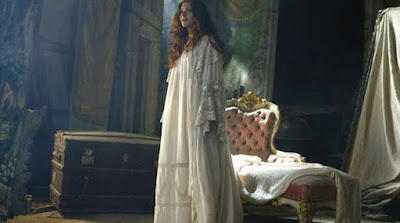

..............................................
Encyclopedia of Women - Chapter XV – Rita Montagnana
and Her Son Aldo Togliatti
https://sicilianaturacultura.blogspot.com/2024/05/enciclopedia-delle-donne-xiv-capitolo.html


............................................................................
The Choice of March 8 as International Women's Day –
Historical Motivations (Encyclopedia of Women – Chapter XVI)
https://sicilianaturacultura.blogspot.com/2024/05/la-scelta-dell8-marzo-come-giornata.html

.......................................
Encyclopedia of Women - Chapter XVII – Women in the
1917 Russian Revolution: Sofia V. Panina and Aleksandra M. Kollontaj
https://sicilianaturacultura.blogspot.com/2024/05/enciclopedia-delle-donne-xvii-capitolo.html

....................................................................
Encyclopedia of
Women - Chapter XVIII – The Marchionesses of Cassibile: Maria Emanuela
Pulejo Loffredo GutKwoski and Maria Caterina Scoppa Loffredo (August 19, 2024)
https://sicilianaturacultura.blogspot.com/2024/08/enciclopedia-delle-donne-xviii-capitolo.html
19 agoato 2024

..................................................................................................................
Encyclopedia of Women – Chapter XIX – Marie-José of
Belgium and Giuliana Benzoni Worked for Peace Negotiations and a Coup d'État
(August 19, 2024)
https://sicilianaturacultura.blogspot.com/2024/08/enciclopedia-delle-donne-capitolo-xix.html
19 agosto 2024

..........................................
The Light of Prehistoric Women: Delia, the Woman of
Ostuni, and Thea, the Princess of Acquedolci (Encyclopedia of Women - Chapter
XX, June 9, 2025)
https://sicilianaturacultura.blogspot.com/2025/06/la-luce-delle-donne-preistoriche-delia.html

................................
The Prehistoric Woman… Never Cited in History Books
(Encyclopedia of Women - Chapter XXI, June 9, 2025)

...................................
The Princess of Ukok and the Altai Mountains
(Encyclopedia of Women – Chapter XXII
Принцесса Укока и Алтайских гор – Женская энциклопедия – глава XXII
https://sicilianaturacultura.blogspot.com/2025/07/la-principessa-di-ukok-e-i-monti-altaj.html
18
luglio 2025

...................................................................
Macalda of Scaletta, the Woman Who Defied Her Time
(Encyclopedia of Women - Chapter XXIII - Voice of Sicily, September 20, 2026)
https://sicilianaturacultura.blogspot.com/2026/09/macalda-di-scaletta-la-donna-che-sfido.html
20 Settembre 2026

…………………………………………………………………………….
The Loves of Atatürk: Fikriye Hanim and Latife Hanim –
First Part (August 1, 2025)
https://sicilianaturacultura.blogspot.com/2025/08/gli-amori-di-ataturk-fikriye-hanim-e.html
1 agosto 2025

The Loves of Atatürk – Second Part (August 7, 2025)
https://sicilianaturacultura.blogspot.com/2025/08/gli-amori-di-ataturk-seconda-parte.html
7 agosto 2025

………………………………..


 An ancient image of the Franciscan Convent (Friars Minor) of Milazzo.
 Route from Milazzo to Patti (Marina).




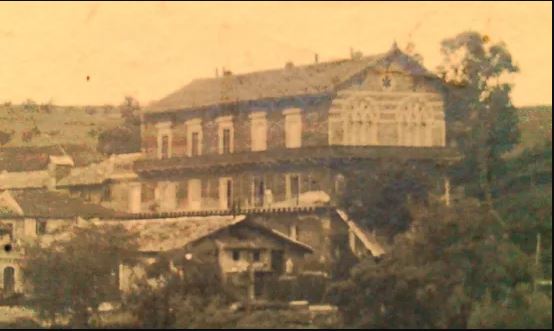

Commenti
Posta un commento